How to Style Botanical Curtains Behind a Reading Chair
To style botanical curtains behind a reading chair, arrange the chair, side table, and reading light around a comfortable seated view, then check that the curtain can open and close freely. Let the leaf pattern form a backdrop while the furniture gives the corner a clear purpose. Judge the arrangement from the chair as well as from the doorway.
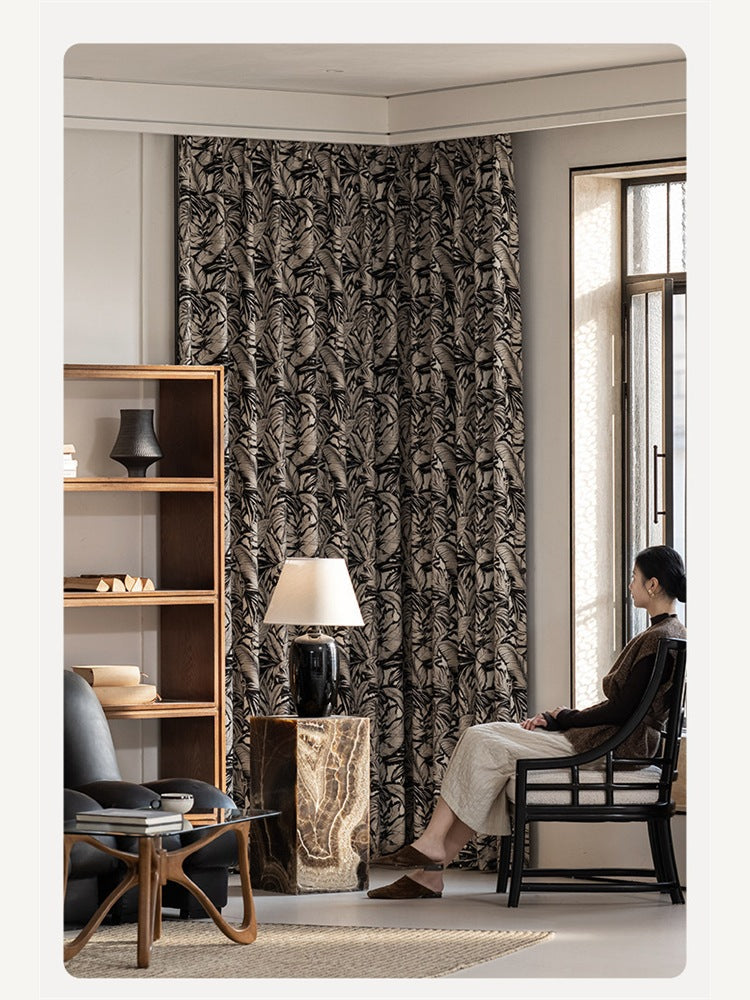
The featured room pairs black leaf-patterned curtains with an open-frame dark chair, a stone-look side table, a shaded table lamp, and wood shelving. A pale rug and light walls surround the seating area. These visible details suggest a useful approach: build a small reading arrangement in front of the pattern without hiding all of it or filling every nearby surface.
Start with the chair's position and your usual reading time
Place the chair where you naturally want to sit, then spend a few minutes with a book before arranging accessories. Notice the page, the window, and the route into the seat. A corner can look convincing in a room photograph yet feel awkward when you reach for a book or get up with a cup in hand.
Try turning the chair slightly toward the room instead of automatically lining it up with the curtain. An angled position may give you a more comfortable view and make the seating feel connected to the rest of the space. Choose the position through a real seated trial; the photograph cannot supply a universal angle or clearance.
Also test the corner at the time you actually read. Daytime window light and an evening lamp create different conditions. Curtain color and the appearance of a bright window in a photograph do not tell you whether your pages will be comfortably lit.
Give the botanical backdrop a visible outline
Consider what appears above and beside the chair
In the featured arrangement, the curtain remains visible above the seated person and beside the chair. This allows the botanical design to read as part of the room instead of becoming a narrow strip behind furniture. When trying your layout, look at the shape of the exposed fabric from the doorway.
A chair with visible space around its frame can reveal more of the backdrop. A fuller upholstered chair can work too, but it will cover a different portion of the pattern. Use the chair you find comfortable and adjust its placement before deciding that a new piece of furniture is necessary.
Let nearby objects overlap selectively
The lamp and side table sit in front of the patterned fabric, creating distinct foreground shapes. You can borrow that idea with a simple lamp shade or a plain tabletop. Avoid gathering every decorative object into the same small area; overlapping shapes are easier to appreciate when their outlines remain readable.
Check the result with the curtain both extended and gathered. Folds and the open stack change the visible leaf pattern and the amount of wall around the chair. A pleasing closed-curtain backdrop should still make sense when you open the treatment for the day.
Place the reading light for the book
Choose the lamp position while seated with a book open. Move it until the page is useful to you, then check whether the shade or bulb feels distracting in your normal line of sight. If the lamp looks balanced from the doorway but leaves your page in shadow, revise the placement.
The photographed table lamp offers one styling option, not a lighting specification. Depending on your existing furniture, an adjustable floor lamp or a different table arrangement may suit your routine better. Check the actual lamp's instructions and intended use rather than copying its apparent position from an image.
Leave the curtain's moving path separate from the lamp, cord, and objects on the table. Operate the treatment through its normal range and follow the lighting manufacturer's clearance instructions. Do not estimate a safe spacing from the photographed setup.
Make the side table useful before adding display pieces
From your normal reading position, try setting down a book and reaching for it again. The table should work without pulling the curtain aside or repeatedly shifting the chair. Test whatever you normally keep nearby, such as glasses or a notebook, before deciding how much decoration belongs on the surface.
A stone-look surface, warm wood, or a plain painted finish can each sit beside a botanical backdrop. There is no requirement to reproduce the photographed table. Compare your existing piece with the curtain and chair, keeping the everyday landing space clear enough for the way you read.
Confirm the curtain separately from the room styling
The current Bali Botanica Black Yarn-Dyed Jacquard Custom Curtain listing offers a related black botanical design on a warm-neutral ground. Review its current options and product information when considering this look. The room photograph is a guide to composition; it does not establish your required panel size, available header, or installed light control.
Use the custom curtain measuring guide to organize the window and hardware information before ordering. Include the chair and table in your layout check, but take curtain measurements from the reference points specified for the selected treatment.
If you are comparing a woven botanical design with other styles, the guide to jacquard curtains explains the pattern terminology. Browse the Luxvelum custom curtains collection once the reading arrangement and intended curtain movement are clear.
Common mistakes in a botanical reading corner
- Arranging only for the doorway view. Sit down with a book and test the light, table reach, and route out of the chair.
- Covering the whole backdrop. Check the visible pattern around the furniture before adding more pieces.
- Blocking the open curtain stack. Test the extended and gathered positions with the chair and table in place.
- Choosing a lamp only for its silhouette. Check page lighting and the manufacturer's placement instructions.
- Ordering from the photograph alone. Confirm the exact product, options, measurements, and functional description.
Frequently asked questions
Can botanical curtains work behind a reading chair?
Yes. Treat them as a backdrop and test how much pattern remains visible around the chair. Keep the furniture arrangement comfortable and confirm that the curtain can move through its intended range.
Does the chair need to match the black leaf pattern?
No. A dark frame can echo the motif, as in the featured room, but a chair in another finish can also work. Compare its outline and upholstery with the curtain in your own room.
Should the reading lamp sit in front of the curtain?
Its position should follow your page-lighting needs and the lamp's instructions. Test it while seated, keep the curtain's travel clear, and check the view from the doorway afterward.
How much space should remain between the chair and curtain?
Use the actual furniture, fabric movement, hardware, and relevant product instructions to determine that. Test sitting, standing, and opening the curtains. There is no reliable clearance to copy from a room photograph.