Article: The Complete Guide to Custom Window Treatments
The Complete Guide to Custom Window Treatments
Short answer: The best custom window treatment is the one that matches the room's light, privacy, maintenance, and style needs while fitting the window correctly. Curtains add softness and decorative impact; roller, cellular, and Roman shades offer compact coverage in different structures; and blinds use adjustable slats for precise light control. Start with function, then choose the material, mount, and finish.
Custom window treatments are made or configured for a particular window rather than selected only from a small set of standard sizes. That can help you address unusual dimensions, coordinate several windows, and choose details that suit the room. It does not mean every product performs the same way. Fabric, construction, installation, and surrounding light all affect the result.
Start with the job your window treatment needs to do
Before comparing colors or patterns, write down the two or three outcomes that matter most. A bedroom may need strong light control and privacy. A living room may benefit from softened daylight without feeling closed off. A kitchen treatment may need a surface that is easy to maintain. A street-facing room may require privacy throughout the day.
Prioritize these questions:
- Light: Do you want to preserve daylight, reduce glare, darken the room, or create the strongest possible light block?
- Privacy: Is privacy needed only during the day, or also at night when interior lights are on?
- Operation: How often will the treatment open, close, raise, lower, or tilt?
- Care: Is the window near cooking activity, humidity, pets, or frequent touch?
- Style: Should the treatment blend into the architecture or become a decorative focal point?
Once these priorities are clear, the choice between custom curtains and shades and blinds becomes much easier.
Compare the main types of custom window treatments
Custom curtains and drapery
Curtains bring fabric, movement, and visual softness to a room. They can frame a window, extend beyond it, or cover a broad wall. The fabric and construction determine whether the result feels airy, tailored, textured, or substantial.
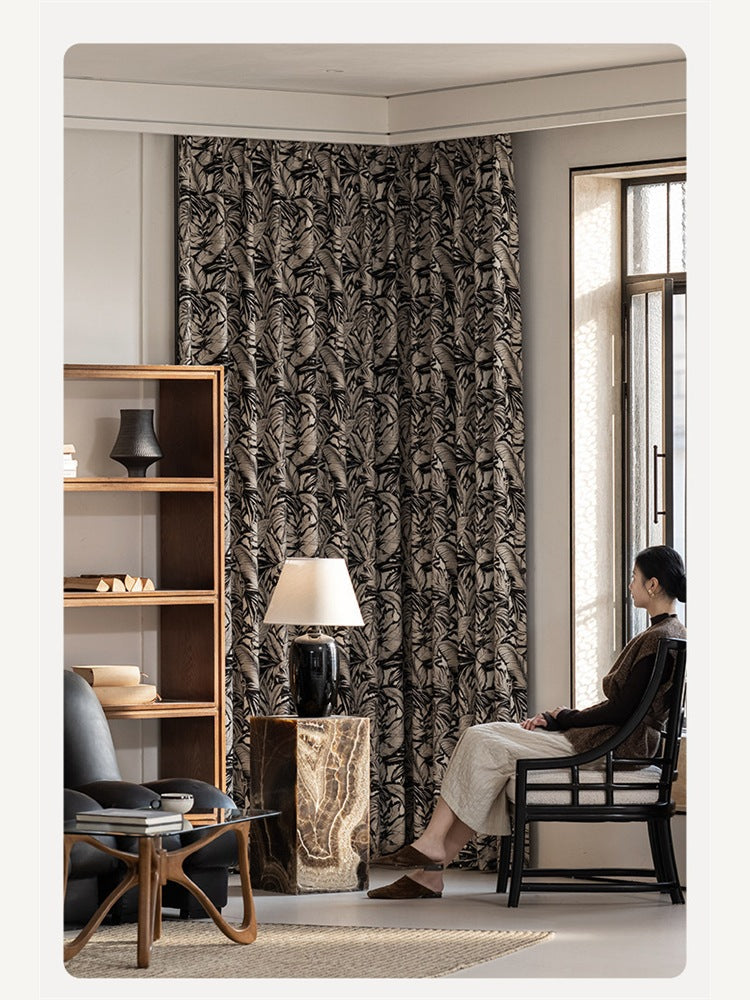
Do not assume every dense curtain is blackout. For example, the Bali Botanica Black Yarn-Dyed Jacquard Custom Curtain is currently described as a room-darkening polyester curtain with a substantial drape. Room-darkening means it helps reduce incoming light; it is not a promise of complete blackout. Curtain performance also depends on dimensions, fullness, installation, lining, and light entering around the treatment.
Sheer and light-filtering curtains
Sheer curtains preserve an open, luminous feeling by allowing more daylight through. They can soften the view, reduce the hard look of bare glass, and add a gentle layer of texture. Because a sheer is intentionally translucent, privacy changes with lighting conditions and should not be treated as guaranteed nighttime privacy.
The LuxVelum Hera Sheer Curtains are a light-filtering polyester voile designed to soften daylight. A sheer can stand alone where openness is the priority or layer with a more opaque treatment when you want flexible light and privacy control.
Roller shades
Roller shades use a flat material that raises into a compact roll. Their clean profile suits rooms where you want the window treatment to feel visually quiet. Material choice matters: a light-filtering roller material and a blackout roller material serve different goals, even if the mechanism looks similar.
Browse custom roller shades by light-control need, then check the exact product description instead of relying on color alone. Even with a blackout material, light can appear at the edges depending on the mount, window, and installation.
Cellular shades
Cellular shades have a pleated, honeycomb-like profile. Their structured fabric cells create a compact treatment that can combine privacy with a soft appearance. Luxvelum's current cellular shade collection includes different light-control options, so confirm whether the selected material is blackout or light-filtering rather than applying one label to the whole category.
Roman shades
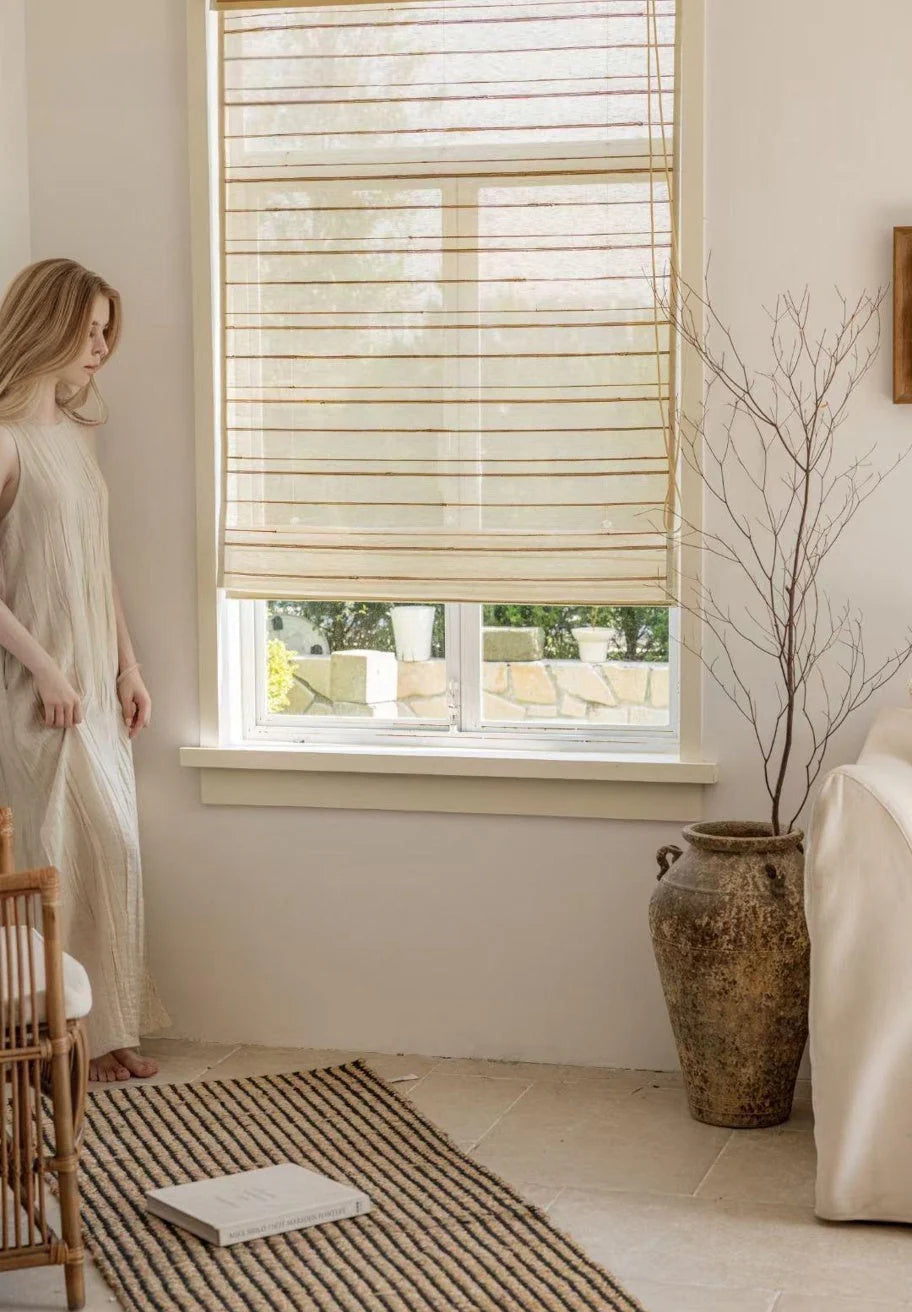
Roman shades combine the softness of fabric with the contained footprint of a shade. As they raise, the material forms horizontal folds. The look can feel relaxed or tailored depending on the fabric and construction. A translucent or light-filtering Roman material will behave differently from an opaque one, so review the exact material before deciding.
Explore custom Roman shades when you want fabric character without full-length curtain panels.
Venetian, wood, and faux-wood blinds
Blinds use adjustable slats. Tilting the slats changes the balance between daylight, view, and privacy without fully raising the treatment. That makes blinds useful for spaces where conditions change throughout the day.
Material affects appearance and care. Aluminum creates a crisp architectural line. Wood brings natural warmth. Faux wood offers a wood-like look with different maintenance characteristics. Luxvelum's current Venetian blind collection includes aluminum and faux-wood options, while the wood blind collection features solid basswood. Compare the exact product construction rather than treating all slatted blinds as interchangeable.
Use light-control terms precisely
Light-control labels are not synonyms. Understanding the difference prevents one of the most common buying mistakes:
- Blackout: A material or treatment designed for the strongest light block. Final room darkness still depends on fit, mount, edges, and installation.
- Room-darkening: Reduces incoming light and can make a room noticeably darker, but does not promise complete blackout.
- Light-filtering: Softens and diffuses daylight while allowing light into the room. Privacy varies by material and lighting.
- Sheer: Intentionally translucent and visually airy. It allows substantial light and offers less privacy than more opaque treatments.
Always read the individual product description and, when available, assess a material sample in the room. A pale color does not automatically mean sheer, and a dark color does not automatically mean blackout.
A step-by-step selection process
1. Rank function before appearance
Choose the primary function and one secondary function. For example: bedroom light control first, decorative texture second. This keeps an attractive but unsuitable material from taking over the decision.
2. Observe the room at different times
Look at the window in morning, afternoon, and evening conditions. Note direct sun, screen glare, neighboring sightlines, and the effect of interior lighting after dark. A treatment that feels private in daylight may behave differently at night.
3. Decide between an inside and outside mount
An inside mount sits within the window opening and creates an integrated look when the opening has suitable depth and clearances. An outside mount attaches beyond the opening and can provide broader coverage. The right choice depends on the product's requirements and the window construction. Follow the measuring instructions for the exact treatment rather than reusing measurements from a different product.
4. Measure each window independently
Windows that look identical may not be. Use a rigid measuring tool, record dimensions carefully, and label each window. Check for handles, trim, cranks, radiators, furniture, or other obstacles that could affect operation. Do not round or apply deductions unless the product instructions specifically direct you to do so.
5. Match operation to daily life
A beautiful treatment is frustrating if it is awkward to use. Consider how often you need access to the window, whether furniture blocks the control, and whether several treatments need to align visually. Confirm the control and mounting options offered on the exact product page.
6. Coordinate color, texture, and scale
Large patterns and dimensional textures draw attention; quiet weaves and simple slats recede. View the treatment next to wall color, flooring, upholstery, and metal finishes. For multiple windows in one sightline, decide whether consistency or deliberate variation serves the room better.
7. Confirm the complete specification
Before ordering, review the chosen material, color, dimensions, mount, operating option, and quantity together. Save the final specification for each labeled window. This is especially important when different rooms use similar-looking treatments with different light-control needs.
Common mistakes to avoid
- Shopping by color alone: Color does not determine opacity, construction, or care.
- Calling every opaque treatment blackout: Room-darkening and blackout are different performance descriptions.
- Using one measurement for several windows: Small differences can affect fit and alignment.
- Ignoring edge light: Strong light-blocking material cannot by itself eliminate gaps created by the mount or surrounding architecture.
- Forgetting nighttime privacy: Sheer and light-filtering materials may reveal more when the room is brighter than outdoors.
- Transferring one product's features to a category: Verify material, light control, and maintenance on the exact item you plan to buy.
Frequently asked questions
Are custom window treatments always better than ready-made options?
Not automatically. Custom options are useful when fit, coordinated details, or product configuration matters. A ready-made treatment can still work well for a standard window and straightforward needs. Our custom vs. ready-made comparison explains the tradeoffs in fit, timing, selection, and project risk. Compare the specification, not just the label.
Should curtains touch the floor?
That is a design decision, not a universal rule. Floor-length panels create a continuous vertical line, while other lengths may suit obstacles or a more casual purpose. Confirm the intended finished length and how the panel will hang before ordering.
Which treatment gives the most precise daylight control?
Adjustable slats can provide fine control over the direction of light and privacy. Roller and cellular shades change coverage by raising or lowering, while curtains can be opened, closed, or layered. The best mechanism depends on how you use the room.
Can a sheer curtain provide privacy?
A sheer can soften views and provide a degree of daytime screening, but it remains translucent. Privacy depends on the weave and the relative brightness indoors and outdoors. Add a more opaque layer when nighttime privacy is important.
How do I know whether I need blackout or room-darkening?
Choose blackout when minimizing light is the main objective, then plan the mount and surrounding coverage carefully. Choose room-darkening when you want meaningful light reduction without requiring the strongest possible block. Check the exact product description because category names and colors are not enough.
Build the specification from your priorities
A confident decision starts with the room, not a trend. Define the light and privacy goal, choose the treatment structure, verify the exact material, measure for the intended mount, and review every option before ordering. If the structure is still undecided, compare curtains, shades, and blinds side by side. Use the window treatment glossary to clarify mounting, hardware, construction, and ordering language as you build the specification. Explore Luxvelum's custom curtain collection and custom shades and blinds to compare verified product details without assuming that every style performs alike.