Curtain Fullness Explained: How Wide Should Your Curtains Be?
How wide should your curtains be? Start with the full span the closed curtains need to cover, then translate that coverage goal through the exact product’s panel, header, and fullness instructions. Curtain fullness is not one universal number. The right amount depends on how the fabric should look when closed, how the heading forms folds, how many panels you plan to use, and whether the seller defines width as finished coverage, flat fabric width, or a single-panel order value.
This guide focuses on that translation step. If you still need to establish the rod or track span and finished drop, begin with the Luxvelum custom-curtain measuring guide. Once those project dimensions are recorded, use the process below to choose a fullness direction without applying an unsupported shortcut.
What curtain fullness actually means
Fullness describes the relationship between the fabric available across a curtain and the horizontal area it covers when closed. Extra fabric allows the panel to form folds, waves, or gathers instead of hanging as a nearly flat sheet. The visual result can feel crisp and restrained, softly tailored, or richly gathered.
Flat fabric width and finished coverage are different ideas
Finished coverage is the side-to-side span that the closed treatment should occupy. Flat fabric width describes the curtain material before it is arranged into its hanging form. A panel can therefore contain more fabric across its flat width than the area it appears to cover when installed. The header controls how that fabric is distributed.
An order-width field may mean something else
A product page may ask for the width of one panel, the combined width of a pair, the desired finished coverage, or another defined value. Those fields are not interchangeable. Read the label and current ordering instructions before converting your project notes into an order. When the definition is unclear, pause and ask the seller rather than assuming.
Build the coverage plan before choosing fullness
Fullness decisions become much easier when the hardware and panel arrangement are already settled. Treat the window opening, the installed hardware span, and the order fields as separate records. That separation prevents an early measurement from being reused in the wrong context.
Use the installed rod or track as the working reference
Curtains normally travel across their rod or track, so the intended covered span should follow the actual hardware plan rather than only the visible glass. Confirm where the hardware begins and ends, where the panels meet, and whether the closed curtains need to extend beyond the opening for privacy or visual framing.
Decide whether the treatment uses a pair or a single panel
A centered pair creates a different order plan from a panel that stacks to one side. With a pair, determine whether the seller wants each panel entered separately or whether one field represents the complete treatment.
Think about both the closed and open positions
Closed curtains need enough fabric and appropriate construction to achieve the chosen look across the span. Open curtains also occupy space along the hardware. Check nearby walls, trim, doors, furniture, vents, and handles so the panel stack can sit where you expect without interfering with the room.
Choose the visual effect you want when the curtains are closed
There is no single best fullness for every room. The useful question is how much visible folding and surface movement suits the fabric, header, pattern, and interior. Describe the desired appearance first; then use the exact product options to achieve it.
A relaxed look keeps the fabric quieter
A restrained fullness direction can suit rooms where the curtain should read as a simple architectural plane. It can keep a strong pattern from becoming visually busy and may work with headers intended to create orderly, controlled folds.
A tailored look emphasizes regular folds
A tailored result balances visible fabric movement with a composed outline. This direction often works well when the header establishes consistent spacing. The goal is an intentional rhythm across the closed treatment rather than maximum gathering.
A generous look creates deeper visual volume
More visible fabric can create a softer, fuller frame and stronger folds, but more is not automatically better. Dense materials can become bulky, a large pattern can compress, and the open stack can occupy more hardware space. Evaluate the whole installation instead of choosing fullness in isolation.
Let the header construction guide the width decision
The header is the part of the curtain that connects to the rod, track, rings, or carriers. It determines how the top edge forms and how the fabric falls below it. Pleated, waved, gathered, pocketed, and ring-hung treatments can distribute fabric differently even when they cover the same span.
Do not transfer a rule between different headers
A width approach that produces the intended result for one header may be wrong for another. Some constructions have folds built into the finished panel; others rely more directly on the amount of fabric placed along the hardware. Select the header first and follow the instructions attached to that exact configuration.
Confirm what the maker has already calculated
Custom products may incorporate construction allowances or fullness choices into their ordering system. If the product asks for finished coverage and then provides a separate fullness option, adding an extra allowance yourself could duplicate the maker’s calculation. If it asks for a flat panel width, the process may be different. Use the product’s definitions rather than rebuilding them from memory.
Account for fabric weight, texture, and pattern
Fabric affects how fullness looks, not just how much material is present. A sheer can form fine, airy folds, while a substantial curtain can create broader visual depth. Neither behavior should be generalized into a category-wide order rule; evaluate the selected fabric and available header together.
Substantial fabrics need space to form and stack
A material with a heavier hand or more dimensional surface can make each fold visually prominent. Check whether the planned header and hardware can support the intended appearance, and consider where the fabric will sit when open.
Pattern placement changes as fabric gathers
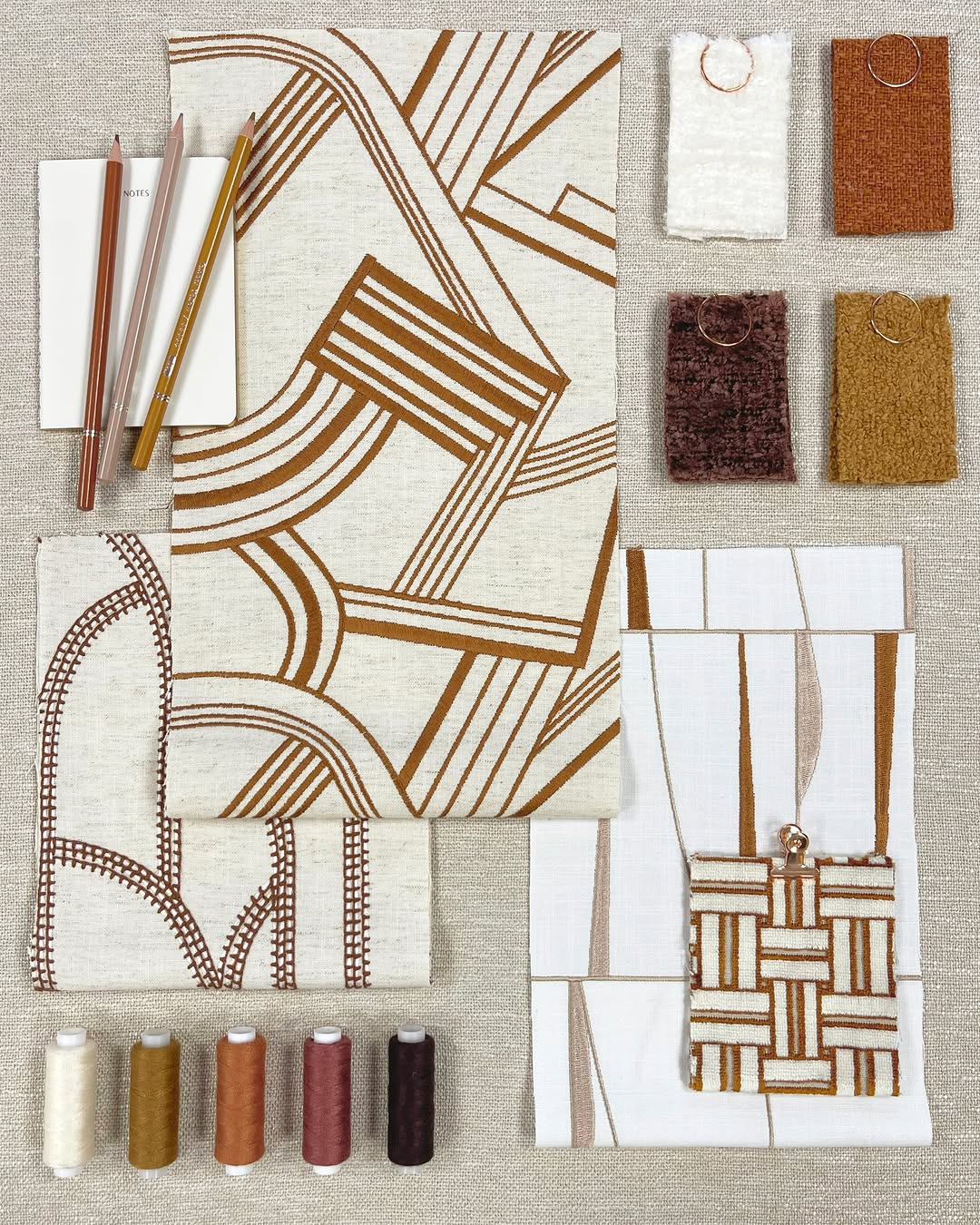
Botanical, geometric, striped, and other repeating motifs can look different once the panel forms folds. A generous treatment may reveal a pattern gradually across peaks and valleys, while a quieter treatment may show more of the motif at once.
Translate the plan into the product’s width fields
- Record the coverage goal. Note the complete horizontal span the closed treatment should occupy.
- Confirm the panel arrangement. Decide whether the design uses one panel, a centered pair, or another supported setup.
- Select the exact header. Do this before applying any product-defined fullness or width guidance.
- Read the order-field definitions. Identify whether each field refers to finished coverage, one panel, a pair, or flat fabric width.
- Choose the intended look. Match the available fullness choice to a relaxed, tailored, or more generous appearance.
- Check the conversion. Make sure the panel values still trace back to the original coverage goal and that no allowance has been counted twice.
Keep a clear record of the hardware span, panel plan, header, chosen fullness, and field definitions instead of one loose note labeled only “curtain width.”
Common curtain-fullness mistakes
Applying one multiplier to every curtain
Generic rules ignore header construction, fabric behavior, panel definitions, and the maker’s ordering system. Use a universal multiplier only when the exact product instructions explicitly tell you to do so. Otherwise, follow the product-specific path.
Using the raw window width as the panel width
The window opening is a useful site measurement, but it does not automatically represent the hardware span, finished coverage, flat fabric width, or width of one panel. Label each dimension by purpose so it cannot be mistaken for another.
Counting a fullness allowance twice
This happens when a shopper adds extra fabric to the coverage goal and then selects a product option that already accounts for fullness. Confirm which part of the calculation the maker handles before adjusting any value.
Choosing appearance without checking operation
A treatment may look appealing when closed yet take up more space than expected when open. Include stack location, furniture clearance, and daily opening direction in the decision.
Use current Luxvelum product details as the final authority
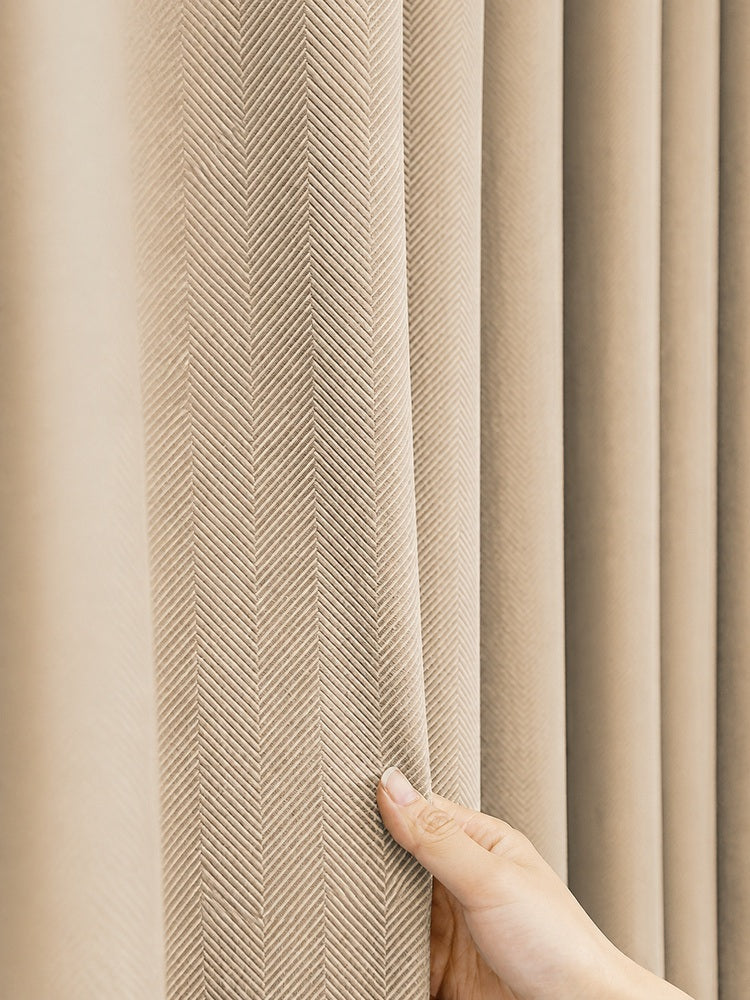
The Luxvelum custom curtains collection is the right starting point for comparing available fabrics and styles. For example, the current Herringbone Velvet Room-Darkening Custom Curtain is described as a velvet-touch, room-darkening design with a substantial drape and configurable custom sizing and header choices. Room-darkening means reduced incoming light; it is not a promise of complete blackout.
Use that product page to verify its current options before ordering rather than transferring its attributes to every curtain. For a broader review of fabric, light control, hardware, and project planning, see the complete custom-curtains buyer’s guide.
Curtain fullness FAQs
Is curtain fullness the same as curtain width?
No. Width is a dimension used in a defined context, while fullness describes how fabric quantity relates to covered span and visible folding. Always identify whether a width refers to finished coverage, flat fabric, one panel, or the entire treatment.
Should each curtain panel equal the full rod width?
Not as a universal rule. The correct panel value depends on the number of panels, the selected header, the desired appearance, and the product’s width definition. Start with the total coverage plan and follow the exact ordering instructions.
Does a heavier curtain need the same fullness as a sheer?
Not necessarily. Weight, thickness, texture, and header construction change how folds form and how much space the open curtain occupies. Decide from the selected fabric and supported options rather than copying a rule from another material.
Can fullness improve room-darkening performance?
Fuller coverage can reduce some open areas within the fabric plane, but room-darkening performance also depends on the material, dimensions, mounting, lining, panel overlap, and light around the edges. Fullness alone does not make a curtain blackout.
What should I do if the product page does not define its width field?
Do not guess. Save the coverage span, panel plan, and header choice, then ask the seller whether the field represents finished coverage, flat panel width, or another measurement. Clarifying before ordering is safer than applying an outside formula.
Final check: Keep the coverage goal separate from the order values, select the header before the fullness direction, use the exact product definitions, and confirm that no allowance has been added twice. That process gives you a curtain width that fits both the window plan and the intended finished look.