Custom Curtains: A Complete Buyer's Guide
Custom curtains are worth considering when you want the finished treatment to fit a specific window, coordinate with the room, and meet a clearly defined need for light control, privacy, texture, or layering. A good purchase starts with the room and the installation—not with a fabric swatch alone. Decide what the curtains must do, confirm how they will hang, measure for the exact product and header, and then compare fabric behavior and care requirements.
This buyer's guide walks through those decisions in a practical order. It also explains why terms such as sheer, light-filtering, room-darkening, and blackout should not be used interchangeably.
What makes a curtain custom?
A custom curtain is prepared around choices you make for a particular window and design plan. Depending on the product, those choices can include finished dimensions, color, fabric, header style, and other configuration details shown on the product page. That differs from buying a ready-made panel in a limited set of standard sizes.
Customization can be especially helpful for unusually proportioned windows, a coordinated group of windows, or a room where the height and width of the treatment are central to the design. It does not remove the need for careful planning. The buyer still needs to confirm the measuring method, hardware position, stacking space, and selected product options before ordering. For a broader comparison, see custom versus ready-made window treatments.
Start with the room's functional priorities
Write down what matters most before comparing materials. A bedroom may prioritize privacy and reduced incoming light. A living room may need a softer daytime atmosphere and a decorative focal point. A street-facing room may benefit from layering so that daylight and evening privacy can be managed separately.
Rank the following criteria instead of assuming one curtain can maximize all of them:
- Daytime light: Do you want an airy glow, softened daylight, or a darker room?
- Privacy: Is privacy needed during the day, at night, or both?
- Visual weight: Should the treatment feel light and quiet or substantial and decorative?
- Daily operation: Will the curtains be opened and closed often, or mainly frame the window?
- Care: What cleaning and maintenance instructions can you realistically follow?
- Layering: Will the curtain work alone or with a sheer, shade, or blind?
If several rooms are involved, make this list for each room. The same fabric is not automatically the right solution for every window in the home.
Understand light-control terms before choosing fabric
Sheer and light-filtering curtains
Sheer curtains are designed to keep the window visually light and allow substantial daylight into the room. A light-filtering fabric softens incoming light without being intended to make the room dark. These categories can support daytime comfort and an airy look, but privacy depends on the weave, lighting conditions, and whether the curtain is layered.
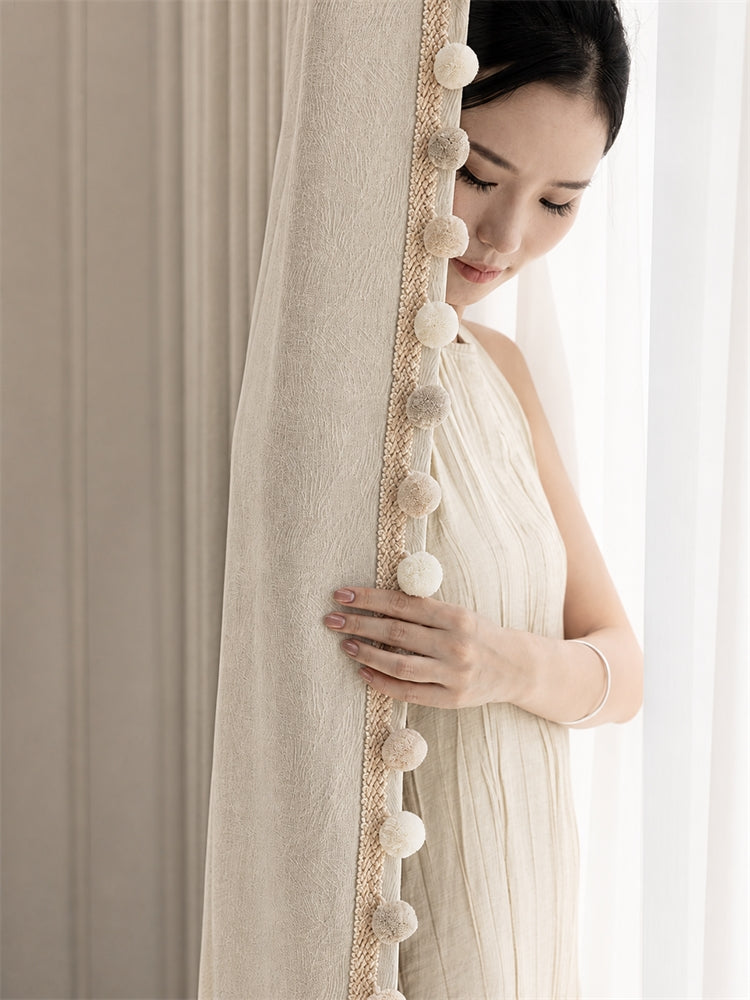
For example, the current LuxVelum Hera Sheer Curtains are described as a light-filtering polyester voile that diffuses daylight. That description belongs to Hera; it should not be generalized to every custom curtain.
Room-darkening curtains
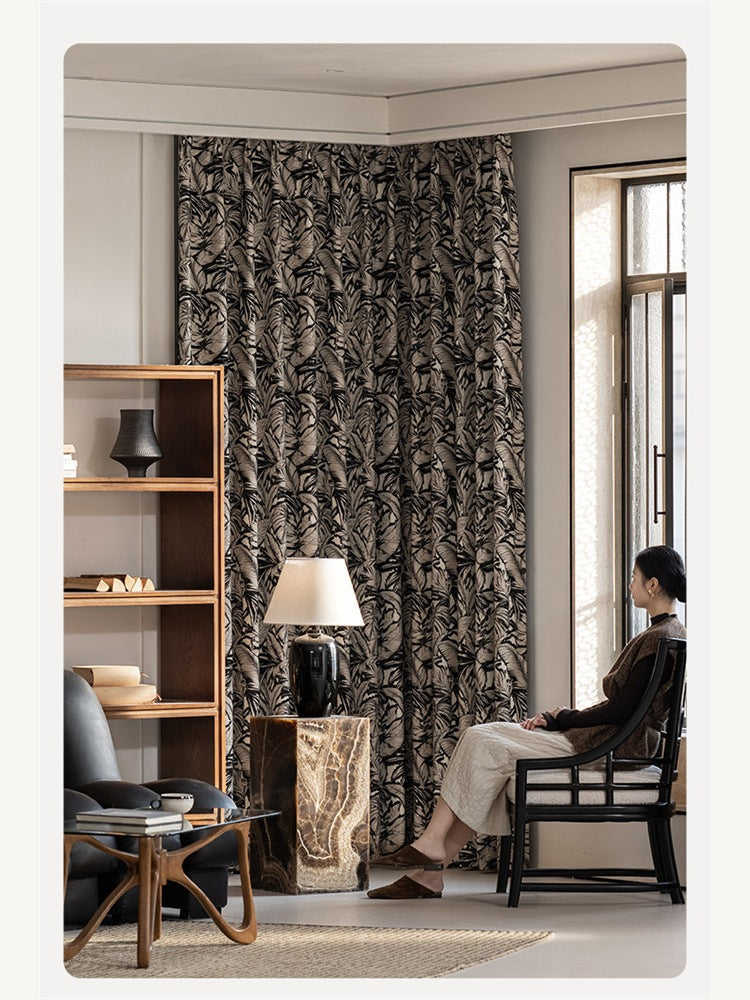
Room-darkening curtains reduce incoming light but do not promise complete blackout. Fabric density matters, and the installed result also depends on panel coverage, fullness, mounting position, and light entering around the edges. Luxvelum currently describes both the Bali Botanica Black Yarn-Dyed Jacquard Custom Curtain and the Maupassant Reversible Chenille Jacquard Room-Darkening Curtain as room-darkening designs. Neither should be presented as a blackout curtain.
Blackout curtains
Blackout is a stronger performance category than room-darkening. If blackout is essential, verify that the specific product is described that way and review how the planned installation will handle light gaps. A category label, dark fabric color, or heavy-looking weave is not enough evidence by itself. The guide to blackout, room-darkening, and light-filtering treatments explains the distinctions in more detail.
Choose the look and hand of the fabric
Fabric changes more than color. It affects how the curtain hangs, how much visual weight it adds, and how clearly a pattern reads across the window. Review both room photographs and close-up images when they are available.
- Voile and sheer weaves create an open, lightweight appearance and are useful for softening a window or forming the inner layer of a two-treatment arrangement.
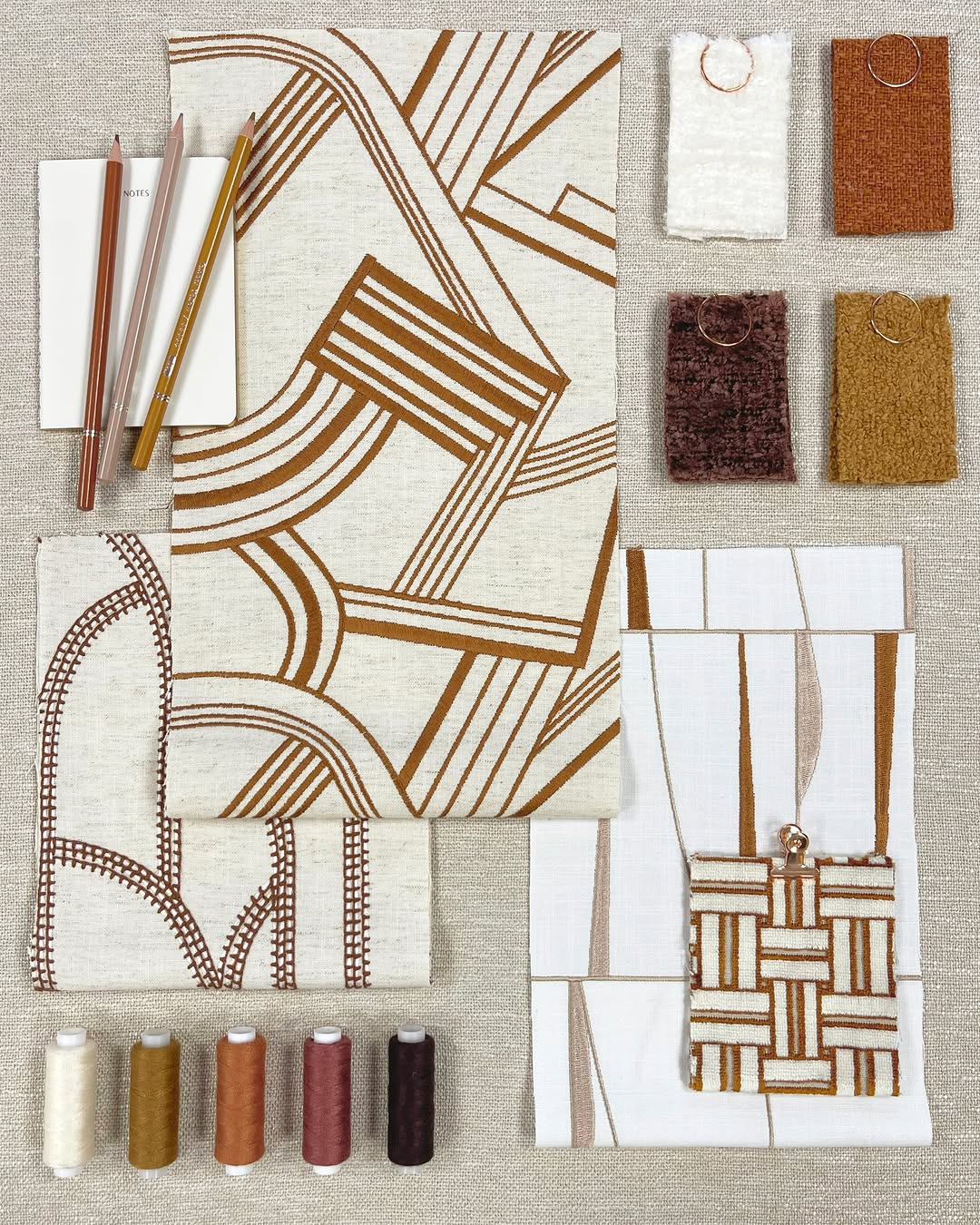
- Jacquard refers to a woven pattern rather than a printed surface. The scale, contrast, and texture of the pattern can make the curtain a quiet backdrop or a focal point.
- Chenille can add a soft, dimensional hand and a fuller visual presence. The exact construction and decorative details still need to be checked product by product.
Order decisions should be based on the product's current description and images, not on assumptions about an entire material category. For a focused look at woven motifs, texture, and product-specific drape, use the jacquard curtain guide. Screen color can also vary, so use any available design assistance when coordinating a precise palette.
Plan mounting, hardware, and stack space together
Curtains need room not only to cover the window but also to gather when open. Before measuring, decide where the rod or track will sit and check whether doors, handles, vents, furniture, or built-ins interfere with the planned curtain path. Consider whether the open panels should clear most of the glass or remain partly in front of it.
The header must be compatible with the chosen hardware and the way you want the fabric to hang. Because header options and ordering rules can differ, rely on the current product configuration rather than applying a generic allowance. If hardware has not been installed, settle its position before finalizing the curtain measurements.
Measure for the selected product—not from memory
Record the window, hardware, and desired finished coverage as separate facts. Use a consistent unit, measure more than once, and label each window so that dimensions are not mixed between rooms. Then follow the instructions for the exact curtain and header you plan to order.
Do not automatically convert the raw opening width into an order width using a universal fullness multiplier. Fullness and width conventions vary by header, fabric, intended appearance, and whether the seller asks for panel width or total coverage. The Luxvelum measuring guide explains how to keep raw dimensions separate from product-specific order dimensions.
Decide whether to layer the curtains
Layering can separate jobs that one fabric may not handle equally well. A sheer inner layer can preserve a soft daytime look, while a more opaque outer curtain can provide stronger evening privacy or reduce more light when closed. A shade or blind can also provide adjustable control behind decorative curtains.
Plan both layers as one installation. Confirm projection, hardware clearance, operating paths, and how the colors and textures relate when both treatments are visible. Do not assume that adding layers converts a room-darkening product into a verified blackout system.
Review the product page before ordering
Once you have narrowed the style, perform a final product-specific review:
- Confirm the exact product name and current light-control description.
- Check the listed material, colors, construction, and featured images.
- Review available sizing and header choices in the current configuration.
- Match the measuring instructions to the intended hardware and mount.
- Confirm care guidance and any other details that affect daily use.
- Save a labeled copy of the measurements and selected options before checkout.
You can compare the current selection in the Luxvelum Custom Curtains collection. Treat each listing as its own specification source.
Common custom-curtain buying mistakes
Choosing by color alone
A color can suit the room while the opacity, texture, header, or daily operation does not. Evaluate function and installation before making the final palette decision.
Using room-darkening and blackout as synonyms
They are not the same promise. Use the exact wording attached to the specific product, and account for light that may enter around the treatment.
Measuring before deciding on hardware
Rod or track position affects the desired finished dimensions and available stack space. Resolve the installation plan first.
Applying one generic fullness rule
Fullness depends on the header, fabric, design goal, and seller's width convention. Follow the current ordering instructions for the selected configuration.
Assuming one product represents the category
A sheer voile, a jacquard room-darkening curtain, and a chenille room-darkening curtain have different verified attributes. Compare them individually.
Frequently asked questions
Are custom curtains always better than ready-made curtains?
No. Custom curtains are useful when fit, coordinated details, or a specific design plan justifies the extra decisions. Ready-made curtains can be practical when a standard size and available style already meet the room's needs.
Do custom curtains automatically block more light?
No. Custom sizing and light-control performance are separate characteristics. Verify whether the exact fabric is sheer, light-filtering, room-darkening, or blackout, then consider installation gaps and coverage.
Should I choose the fabric or measure first?
Define the room's needs and installation plan first, narrow the product and header, and then take the measurements required for that configuration. The choices influence one another.
Can sheer curtains provide privacy at night?
Do not rely on a sheer alone for strong nighttime privacy without evaluating the specific weave and lighting conditions. Layering it with a more opaque treatment is often the clearer way to manage separate daytime and nighttime needs.
How many panels should I order?
That depends on the total coverage, desired arrangement, product width convention, header, and whether dimensions are specified per panel or for the full treatment. Confirm the current product instructions before ordering.
A confident buying sequence
The safest sequence is simple: define the room's priorities, choose the installation and hardware, compare specific fabrics by verified attributes, measure for the selected configuration, and review every option before checkout. That process keeps design preferences connected to the practical details that determine how custom curtains look and work in the finished room.