Curtain Length Guide: Sill, Floor, Break or Puddle?
Direct answer: Choose curtain length by deciding where the finished hem should meet the room: at the sill for compact, practical coverage; at the floor for a clean everyday finish; with a break for a relaxed fold at the floor; or in a puddle for a deliberately dramatic look. Set the hardware position first, measure from the exact hanging reference to that endpoint, and confirm how the specific product defines finished length before ordering.
Start With the Finished Look, Not a Standard Number
First choose the visual endpoint. Then translate it into a finished length using the measurement instructions and header definition for the exact curtain you are considering.
Fix the hardware position before measuring
A rod that has not been installed—or at least firmly planned—leaves the starting point uncertain. The relevant starting point may be the top of a rod, the bottom of a ring, or another product-specific reference. Changing the rod position after ordering changes where the hem lands. If you are still planning hardware, complete that decision before taking the final order measurement.
Measure to the real surface
Use the finished floor, sill, or other intended endpoint, not a construction estimate. Check more than one vertical point because floors, sills, and ceilings can vary. Record the observations, then follow the seller's instructions for handling any difference. The custom curtain measuring guide explains how to separate the installation reference from the finished panel dimensions.
Sill-Length Curtains: Compact and Practical
Sill length ends at or around the window sill rather than continuing to the floor. It can suit windows above a work surface, built-in seat, radiator, or piece of furniture where a long panel would interfere with the space. It also keeps more fabric away from floor-level dirt and routine foot traffic.
When sill length works well
Consider this endpoint when the lower wall must remain accessible, when a floor-length panel would cover something functional, or when the room calls for a compact treatment. Before choosing it, check that the curtain will not brush objects on the sill and that its open position will not crowd nearby handles or fixtures.
What to watch for
A short curtain makes its endpoint visually obvious. If the sill is uneven or the hardware is not level, the hem can emphasize the difference. Also consider privacy: a short panel should still cover the glass area you intend to screen when closed. Do not assume that “sill length” has one universal order definition; confirm the exact endpoint and header reference for the product.
Floor-Length Curtains: Clean and Versatile
Floor length creates a continuous vertical line from the hardware toward the floor, with the hem planned to meet or visually skim the surface without forming an intentional fold. It is often the most adaptable option for curtains that will be opened and closed regularly.
Precision matters at the floor
A clean floor finish depends on the real hardware reference and the real floor. A panel that is unintentionally short may look disconnected; one that is unintentionally long may buckle instead of hanging cleanly. Check flooring, rugs, vents, and thresholds in the panel's path. If the curtain will travel behind furniture, make sure the intended hem will move freely.
Break-Length Curtains: Relaxed Structure
A break-length curtain reaches the floor with enough additional fabric to create a controlled fold where the hem rests. The result is softer and more relaxed than a clean floor finish, but less abundant than a full puddle.
Choose the break deliberately
The fold should read as part of the design, not as a measuring mistake. Fabric character matters: a substantial textile may form a broad, sculptural break, while a lighter textile may collapse into a gentler fold. Because behavior varies, use product imagery and fabric information as visual guidance rather than transferring the drape of one curtain to every material.
Plan for movement and cleaning
Any fabric resting on the floor meets more dust and friction than a hem that clears it. A break can also resist smooth side-to-side movement. It is better suited to a panel that can be dressed after opening or closing than to a high-traffic treatment that must glide quickly throughout the day.
Puddle-Length Curtains: Formal and Dramatic
A puddle extends beyond the floor endpoint so extra fabric spreads or gathers on the floor. It creates a decorative, high-impact silhouette and can make a tall curtain arrangement feel especially luxurious. That visual abundance comes with practical tradeoffs.
Use puddling where the fabric can stay composed
Puddles work best where panels are moved infrequently and the floor stays dry and relatively undisturbed. They are a poor fit near active doorways, rolling chairs, pets that play at the window, or any location where fabric could become a trip or cleaning concern. Avoid the treatment in spaces where the hem could meet splashes or damp surfaces.
Decide how the excess fabric should sit
“Puddle” describes a family of arrangements, not one fixed result. Extra fabric may fall mostly forward, spread to the sides, or be dressed into a fuller pool. The chosen fabric, lining, header, fullness, and panel width all influence the shape. Review the curtain fullness guide separately, because length and fullness solve different dimensions of the plan.
How to Choose Among the Four Lengths
Use the room's constraints to narrow the choice before you think about style. A beautiful endpoint still needs to function in the actual space.
Consider how often the curtains move
Frequently operated curtains generally benefit from a hem that moves without dragging. Stationary side panels allow more freedom for a break or puddle because they can be arranged and left in place. If the curtain covers a door or another passage, prioritize clearance and predictable movement.
Match the endpoint to furniture and surfaces
Map the curtain's full travel path. Note radiators, vents, deep sills, window seats, desks, bed frames, and rugs. A floor treatment should not block heat or airflow, and a short treatment should not interfere with objects below the window. If furnishings make a long panel impractical, sill length may be the more coherent solution.
Account for fabric behavior without generalizing
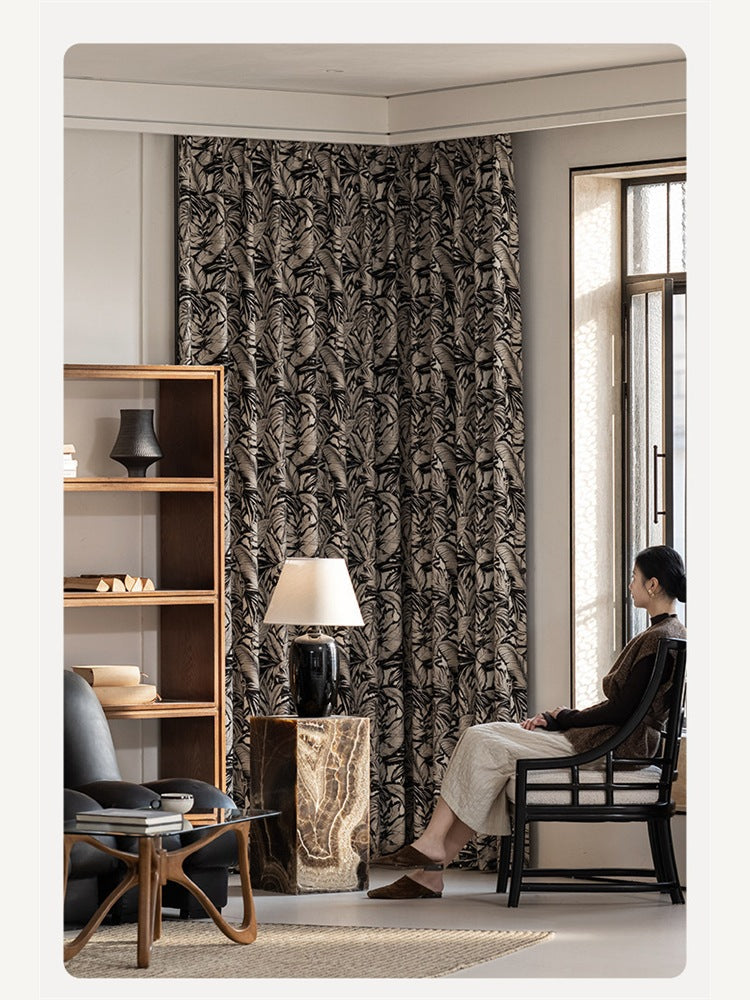
Weight, weave, lining, and surface texture affect how a hem falls, but each product must be evaluated on its own information. The current Maupassant Reversible Chenille Jacquard Room-Darkening Curtain, for example, is described as a substantial, reversible chenille construction; that description belongs to this product, not to all custom curtains. Browse the Custom Curtains collection and compare the exact product pages before choosing an endpoint.
Decide how much upkeep you accept
Floor contact increases exposure to dust, pet hair, vacuuming, and foot traffic. A clean floor finish is usually simpler to maintain than a break or puddle. Always follow the care guidance for the selected product; do not assume that one curtain's cleaning method applies to another fabric or trim.
A Reliable Curtain-Length Planning Process
- Choose the functional endpoint. Decide whether the room calls for sill, floor, break, or puddle length.
- Confirm the hardware layout. Fix the rod and header plan so the measurement starting point is stable.
- Inspect the full path. Check floors, sills, rugs, furniture, vents, doors, and other obstacles.
- Measure in several places. Use the actual finished surfaces and record any variation.
- Open the exact product page. Confirm how it defines width, length, panel quantity, header, and available customization.
- Review fabric and movement. Decide whether the chosen textile and daily operation suit floor contact.
- Verify before ordering. Recheck the entered values and request product-specific help if any field remains unclear.
For the broader fabric, header, light-control, and ordering decisions that accompany length, use the complete custom curtain buyer's guide.
Common Curtain-Length Mistakes
Measuring before the rod plan is final
Moving the hardware after measuring moves the finished hem. Finalize the installation reference first.
Using a room label instead of checking the space
A bedroom does not automatically need one length, and a living room does not automatically need another. Furniture, doors, floor conditions, operation, and cleaning matter more than the room name alone.
Confusing panel length with hanging-point distance
The distance you observe in the room may not be identical to the value a product expects. Header construction and seller definitions can change the reference. Follow the exact product instructions.
Choosing a puddle without accepting its upkeep
Extra floor fabric needs dressing and more frequent attention. If the curtain must move daily or share the area with active traffic, a cleaner endpoint is usually more practical.
Assuming every fabric will break the same way
A product photo shows that product under particular styling conditions. Treat it as evidence for that curtain, not a promise for every weave, lining, width, or header.
Frequently Asked Questions
Should curtains touch the floor?
They can, but they do not have to. A floor, break, or puddle treatment intentionally relates to the floor, while sill length serves spaces where a long panel is impractical. Choose based on movement, cleaning, obstacles, and the look you want.
Is floor length easier to maintain than a puddle?
Generally, a hem that does not spread across the floor collects less floor-level dust and is easier to move. Actual care still depends on the selected fabric and the product's instructions.
Can I use sill-length curtains in a bedroom?
Yes, if they provide the intended glass coverage and fit the furniture and fixtures around the window. Privacy and light control also depend on fabric, fit, installation, and gaps—not length alone.
Do I measure from the rod or from the rings?
Use the starting reference specified for the exact header and product. It may relate to the rod, ring, hook, or another point. Do not guess or transfer the definition from a different curtain.
Should paired curtain panels always have the same finished length?
They should normally share the intended visual endpoint, but measure the installation and floor conditions across the full span first. If the surfaces vary, ask how the product's customization process handles that condition before ordering.
Final Takeaway
Sill, floor, break, and puddle lengths each solve a different combination of style and function. Pick the endpoint that fits the room, stabilize the hardware plan, measure the actual space, and translate that result through the exact product's order definitions. That sequence produces a deliberate hem instead of relying on a generic rule that may not fit your window.