How to Evaluate Curtain Fabric Samples at Home
To evaluate a curtain fabric sample at home, hold it upright near the intended window, compare it with your fixed room finishes, and revisit it in daylight and evening light. Assess color, surface feel, and pattern separately, then use the current product description and full-panel photographs to answer questions the small sample cannot resolve.
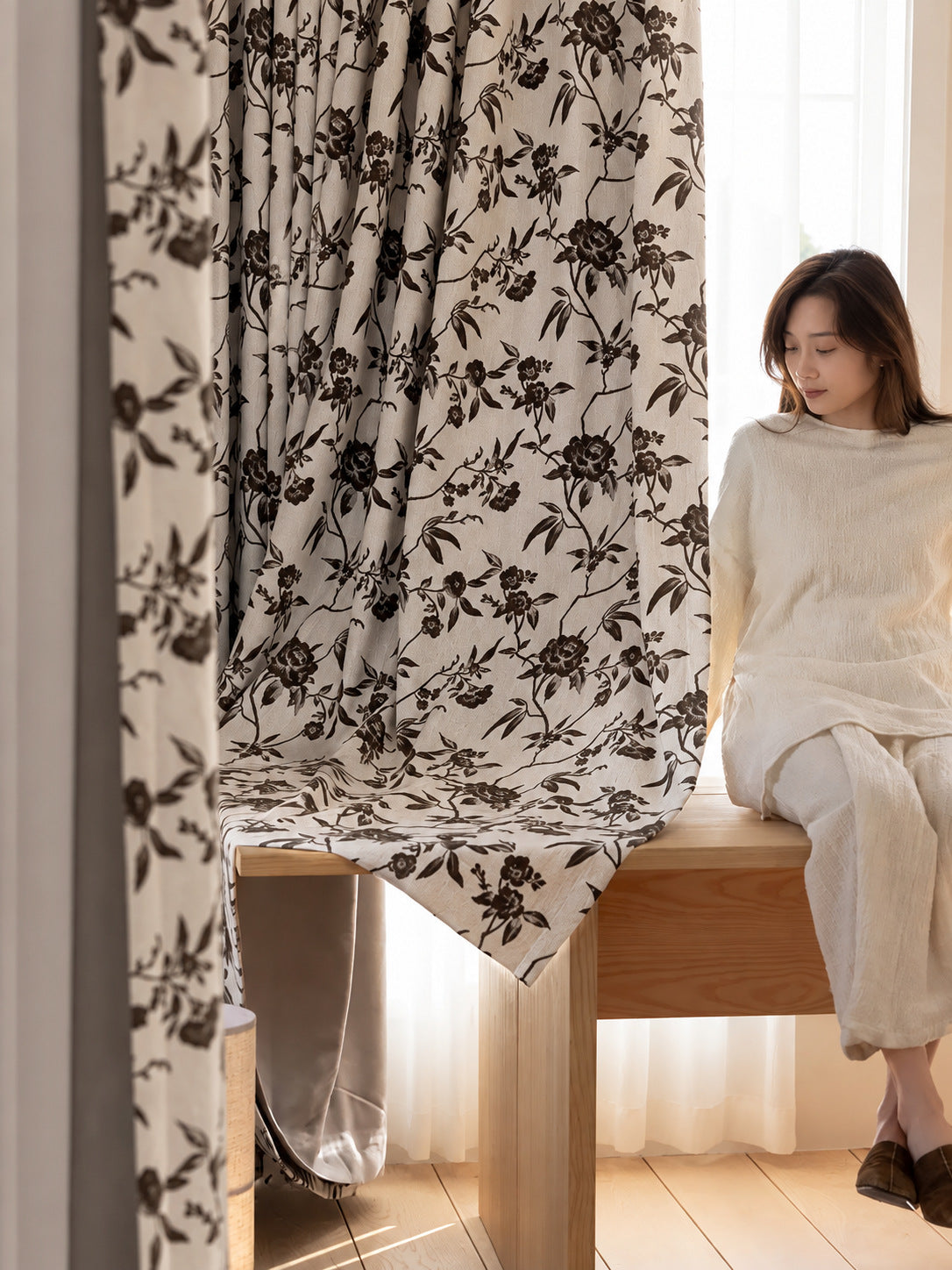
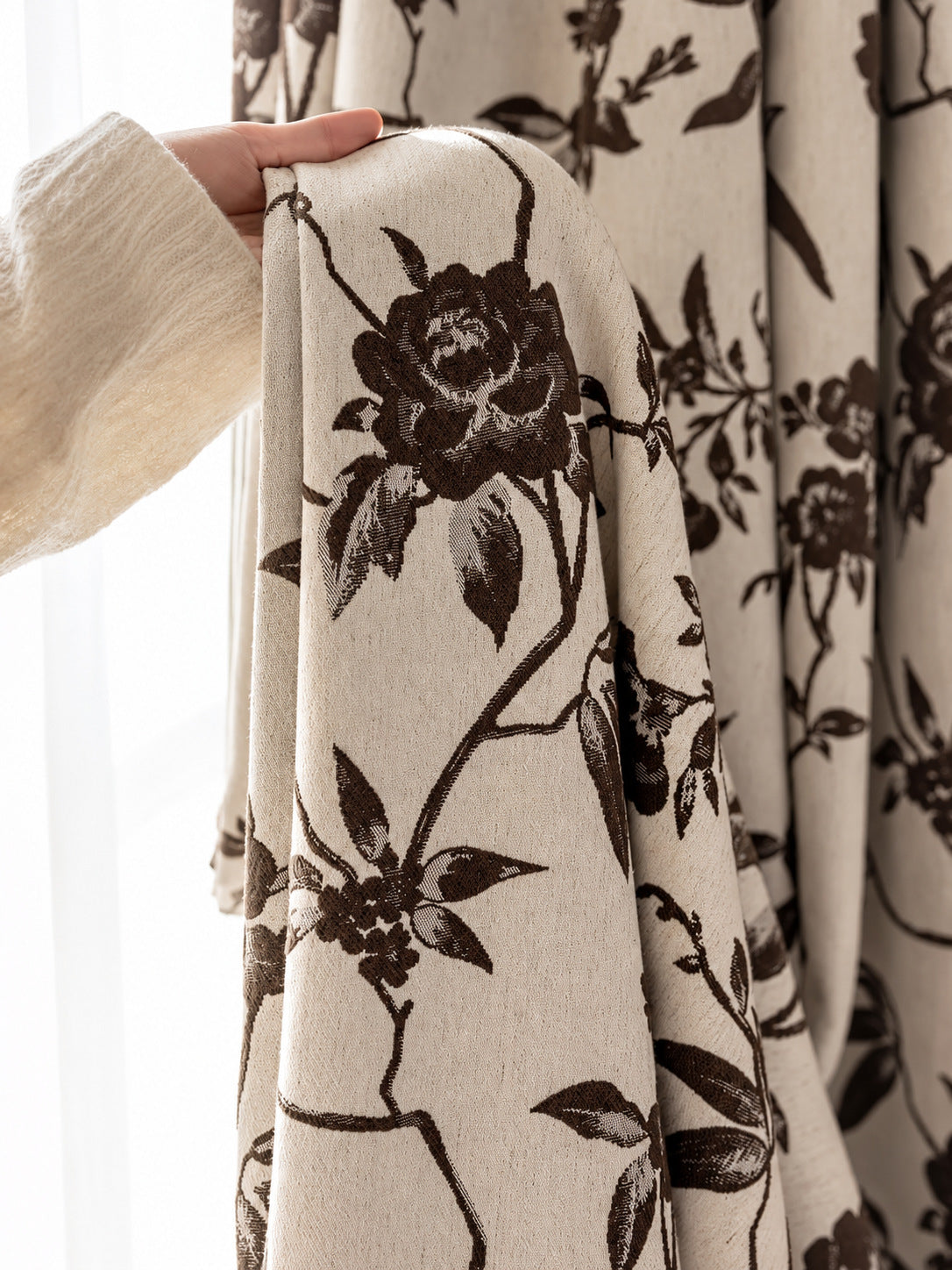
The featured close-up shows a hand holding light-colored fabric with dark floral branches, with matching patterned curtains behind it. The view makes the surface and contrast easy to notice. It also illustrates a useful shopping distinction: seeing fabric up close is one step, while judging how a finished curtain will look across a whole window is another.
Start with the exact fabric you are considering
Before ordering a sample, match its name and color option to the curtain listing. Similar-looking florals can have different backgrounds, motif sizes, or finishes. Confirm that the available sample corresponds to your intended selection rather than choosing solely from a thumbnail.
Browse the available LUXVELUM Curtain Fabric Swatches and check the listed options. If your chosen curtain is not clearly represented, ask for the correct sample before purchasing. Keep its label beside it during comparisons so an appealing piece of fabric does not become separated from its product identity.
Set up a comparison at the actual window
Place the sample where the curtain will hang, with its intended face toward the room. Hold it vertically rather than judging it only while it lies on a table. A horizontal sample under an overhead light gives you a different view from fabric beside the glass.
Compare it first with the things you plan to keep: wall paint, flooring, a sofa, or a nearby cabinet. Bring a cushion or removable upholstery sample closer when practical. For fixed finishes, move the curtain sample to them, then return to the window. This helps you see the relationship without relying on a photograph of the room.
Give each candidate a turn on its own before placing the finalists side by side. A dark sample can make its lighter neighbor appear more striking, so check whether you still like each choice when the competing fabrics are removed.
Separate the background color from the motif
Look at the light ground first
In a dark-on-light floral, the pale background is a substantial part of the design. Compare that background directly with the wall and nearby upholstery. Decide whether you prefer a close relationship or a deliberate difference; a sample does not have to match every surface to belong in the room.
Check the background in the window area and beside the furnishings. A color that feels pleasant against one finish may be less appealing against another. Write down the specific pairing you prefer instead of relying on a general impression such as “neutral.”
Then check the dark shapes
Notice how strongly the flowers and branches stand out. Compare them with any dark furniture, picture frames, or hardware already present. The goal is to decide whether the pattern feels connected to the room or demands more attention than you want.
Step back to a normal viewing position. A small sample will not represent a full panel, but this change of distance can help you distinguish fine surface detail from the larger contrast you notice first.
Revisit the sample under everyday lighting
Look at the same candidates during the day and again with the lamps you normally use in the evening. Keep their position and orientation consistent for a useful comparison. Note whether the background still works with the wall and whether the motif remains as prominent as you expected.
If the room has several windows, check the sample near each one before choosing a single fabric for the space. Use quick written notes such as “works beside sofa in evening” or “background too close to cabinet color.” Phone photos can help you remember the setup, but return to the physical sample for the final color decision.
Feel the surface without guessing the specification
Handle the sample gently and decide whether you enjoy its texture. Notice the surface detail, how it feels between your fingers, and whether it has the visual character you want near seating or a bed. Describe your observations in plain terms, such as smooth, textured, or firm.
Keep those impressions separate from material and care information. A textured appearance alone cannot establish fiber content, construction, or cleaning instructions. When a current listing identifies a fabric as jacquard, the guide to jacquard curtains provides context for its pattern and drape. Use the exact listing to establish which details apply to your selection.
Use larger views to judge the pattern in folds
A swatch may show only part of a flower or branch. Review the selected curtain's full-panel and room photographs to understand how the motif continues. Ask for a broader view if the available images do not answer your question about pattern scale or direction.
A gentle fold in a sample can show how its surface catches light, but it cannot predict the hanging shape of a finished curtain. Panel dimensions, the chosen header, and the completed configuration need their own review. Consult the curtain fullness guide when planning the folds and coverage, following the product's own order-field definitions.
Common sample-shopping mistakes
- Choosing from one lighting condition. Revisit the fabric under the daylight and lamps you actually live with.
- Comparing only with new accessories. Check the fixed finishes and furniture that will remain in the room.
- Treating a small motif fragment as the whole design. Pair the sample with a full-panel view before deciding on a patterned curtain.
- Assuming the sample proves light control. Holding a swatch to a lamp does not establish the performance of an installed treatment. Check the exact product description.
- Losing track of the selected option. Keep the fabric name and color attached to your decision notes.
Frequently asked questions
Should I check a curtain sample beside the window or the sofa?
Do both. Start at the intended window, then compare with the sofa and other important finishes. Return to the window before making the final decision so you assess the fabric in its planned location.
Can a small swatch show the whole floral pattern?
Only if it includes enough of the design, which should not be assumed. Use the current full-panel images to understand the larger arrangement and ask for clarification when an important part of the motif is missing.
Can I confirm blackout performance with a fabric sample?
A casual sample check cannot establish an installed curtain's blackout performance. Use the verified description for the selected fabric and configuration, and confirm coverage and installation separately.
What should I record before ordering the curtain?
Save the exact fabric and color names, your preferred room pairings, and any unanswered questions. Confirm the header, panel arrangement, dimensions, care instructions, and current product options before placing the final order.
Once you have a clear favorite, return to Luxvelum custom curtains and match your notes to the current listing. Let the sample guide the color and texture decision, then complete the separate checks that turn a fabric choice into a curtain plan.