How to Mix Curtain Texture with Baskets and Upholstery
To mix curtain texture with baskets and upholstery, give each surface a different role: let the curtain carry the main decorative detail, use a basket as a smaller textured accent, and leave a quieter upholstered surface between them. Connect the pieces through a related color, then compare them from your usual seat. You do not need matching weaves or identical finishes.
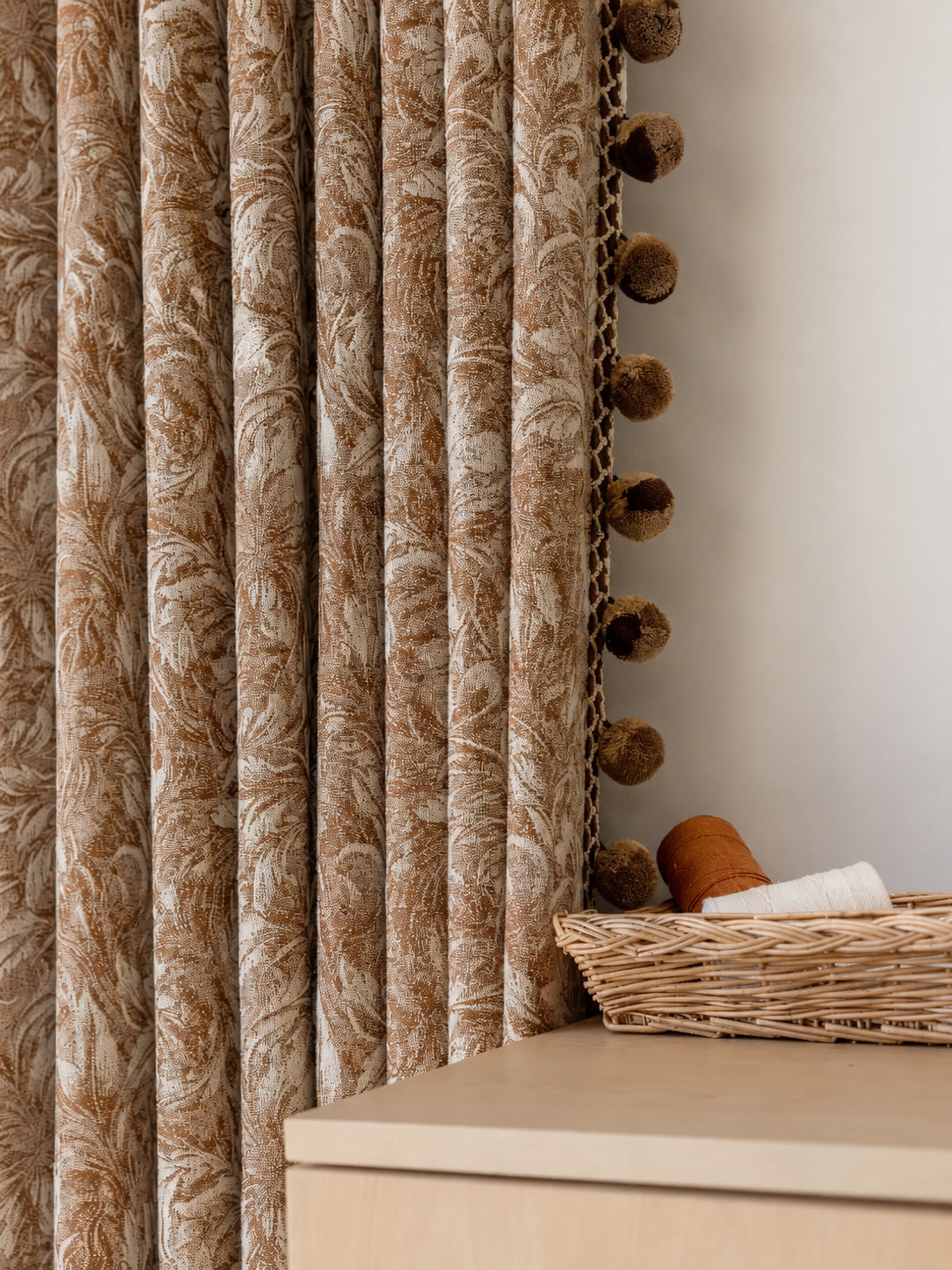
The featured close-up pairs brown-and-cream leafy curtains and rounded pom-pom edging with a pale woven basket on a smooth, light-colored surface. The basket holds rust-colored and white spools. The contrast between dense fabric detail, open basket lines, and the plain tabletop offers a useful starting point for a layered room. The photograph shows appearance, not fiber content or performance.
Separate color, pattern, and texture
These choices overlap, but checking them separately makes coordination easier. Color connects the brown curtain to a warm accent. Pattern describes the leafy shapes. Texture concerns the surface detail you see and, with an actual sample, can feel. A plain cushion can have a pronounced texture, while a patterned fabric may feel comparatively smooth.
Start by naming what is already prominent in your room. A leafy curtain may supply both pattern and surface detail. A basket adds another arrangement of lines. If the sofa also has a conspicuous weave, the window corner may benefit from fewer small accessories rather than another textured throw.
Choose the largest surface first
Begin with the sofa or curtains, whichever you already own or intend to keep. These occupy more of the view than a basket or pillow, so they should guide the smaller decisions. Put a curtain sample beside the upholstery and wall before choosing decorative storage.
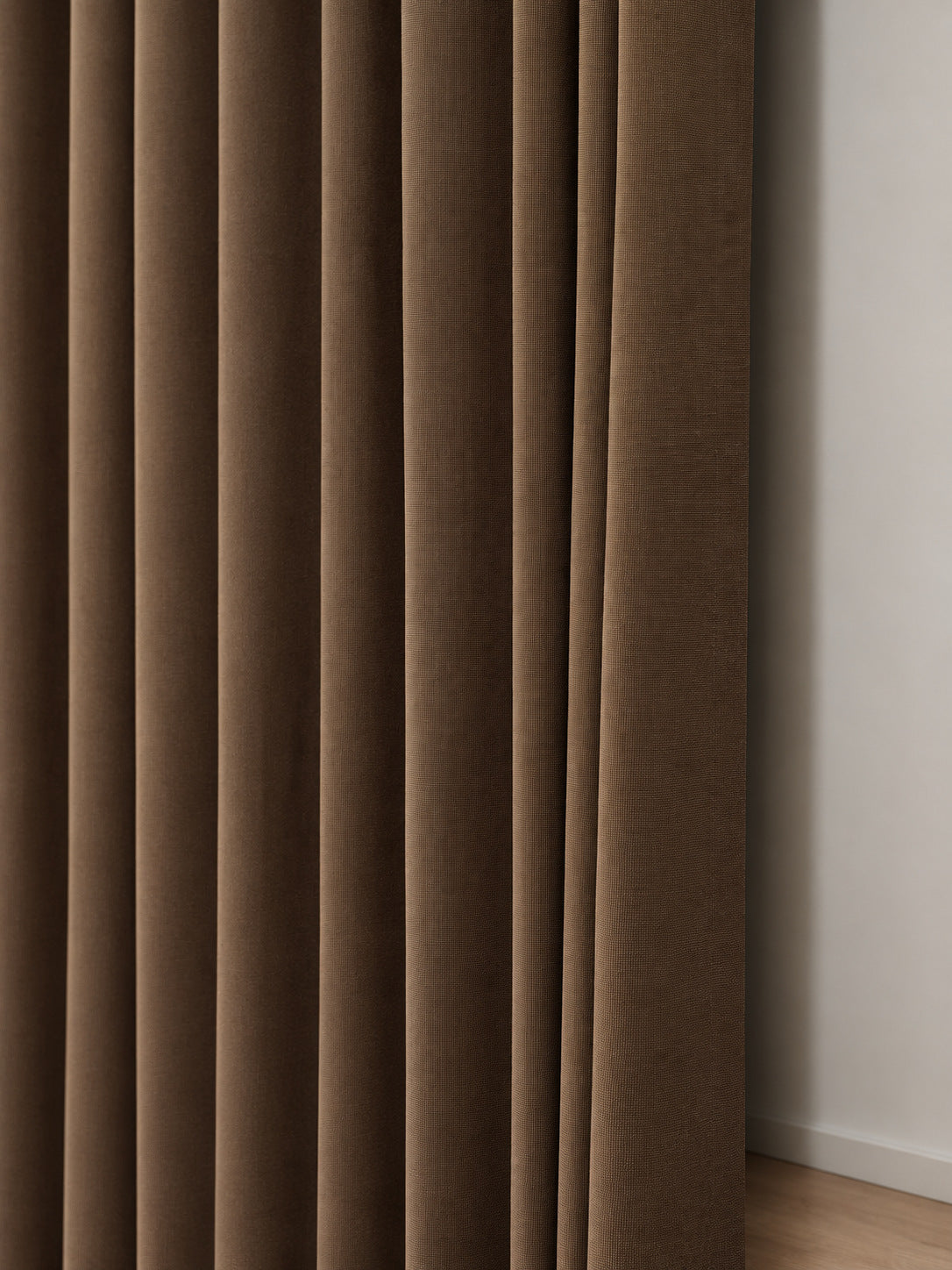
If the curtain is your focal point, try upholstery with a quieter surface and a color that relates to its background. If you love a visibly nubby sofa, consider a curtain whose pattern feels less busy beside it. Neither piece has to disappear; the aim is a combination in which you can appreciate each surface.
Browse Luxvelum custom curtains when you are ready to compare current options. Use the individual listing for the actual construction, available colors, and functional features. A textured appearance alone does not establish how a curtain controls light or how it should be cleaned.
Give baskets a supporting role
In the photograph, the pale basket provides a relatively compact area of straight and crossing lines beside the curtain's curling motif. Its lighter color also relates to the pale areas of the fabric. You can borrow that relationship without copying the basket's shape or assuming a particular material.
Compare the spacing of the visible lines
A basket with broad bands can read differently from one with many fine strands. Hold your fabric sample near the basket you own and look at their combined detail. If the two surfaces compete, try a simpler basket outline or move it farther from the curtain in the room arrangement.
Choose one useful accent before adding a group
Start with a basket that has a real purpose, such as holding a folded throw beside a chair. View it with the curtain before adding several more. A collection of small baskets can introduce more repeated edges than one larger piece, even when every item shares the same pale color.
Use upholstery to create a visual pause
A sofa or armchair can connect the textured window and storage without repeating both. Try a solid fabric in a related cream, taupe, or brown, then assess its surface in person. A color name is only a starting point; the actual sample may look warmer, cooler, or more pronounced beside your curtain.
If your upholstery already has a strong texture, test a plain cushion before adding fringe, embroidery, or a chunky throw. You may find that one smooth accent makes the existing surfaces easier to enjoy. Alternatively, keep the cushion textured and simplify the basket arrangement. Change one element at a time so the result is easy to judge.
Separate the broad fabric surface from the edge decoration, too. The guide to decorative curtain edges covers trim placement and finish questions. For this room-level decision, simply notice whether the edge already contributes enough detail to the grouping.
Repeat a color without repeating every surface
The featured basket and tabletop share a pale appearance with parts of the curtain, while the rust-colored spool adds a small warm accent. This suggests a flexible approach: repeat one background tone across the larger pieces, then use a deeper or warmer color in a smaller object.
For example, pair a brown-and-cream curtain with quiet cream upholstery and a pale woven basket. Then try a plain rust cushion if you want another color. If the combination already feels complete, leave out the extra accent. Coordination does not require a set number of textures or colors.
Review the combination from more than one distance
A close-up helps you notice surface details, but the view from the doorway shows whether the whole arrangement feels balanced. Check both. A basket that seems busy beside a sample may be a minor accent once it sits next to a full sofa and curtain panel.
Compare the pieces in daylight and under your usual evening lamps. Let the curtain sample hang loosely rather than inspecting it only flat on the table. The fabric sample evaluation guide provides a fuller comparison process. For available sample options, review LUXVELUM Curtain Fabric Swatches and confirm the sample corresponds to your selected fabric; it may not include decorative edging.
Common texture-mixing mistakes
- Choosing every piece for its close-up detail. Include a quieter surface and assess the complete view before adding more.
- Matching all the weaves. Related colors can connect different surfaces without duplicating their construction.
- Ignoring objects already in the room. Rugs, lampshades, throws, and storage all contribute visible detail.
- Inferring materials from photographs. Verify the selected item's composition and care requirements separately.
Frequently asked questions
Can textured curtains work with a textured sofa?
Yes. Compare their prominence, pattern, and color together. If both feel visually strong, try simpler cushions and a restrained basket arrangement before replacing either main piece.
Should a basket match the curtain color?
It can pick up a background tone or provide a deliberate contrast. Exact matching is optional. Compare the actual pieces with the wall and upholstery visible so the choice works with the whole room.
How many textures should I use near a window?
There is no required number. Begin with the curtain and existing furniture, then add one useful accent. Keep it only if you like the combined view from your normal seat and the doorway.
Does a textured curtain photograph prove the fabric is soft?
No. A photograph shows visible surface detail. Check the current product description and an appropriate physical sample when the feel of the fabric matters to your choice.