How to Read Curtain Fabric Photos Before You Order
Read curtain fabric photos by comparing three views: a close-up for visible surface detail, a hanging panel for folds, and a room view for overall scale. Match every view to the exact fabric and color option, then use the product description and a physical sample to resolve questions about composition, feel, care, and color in your home.
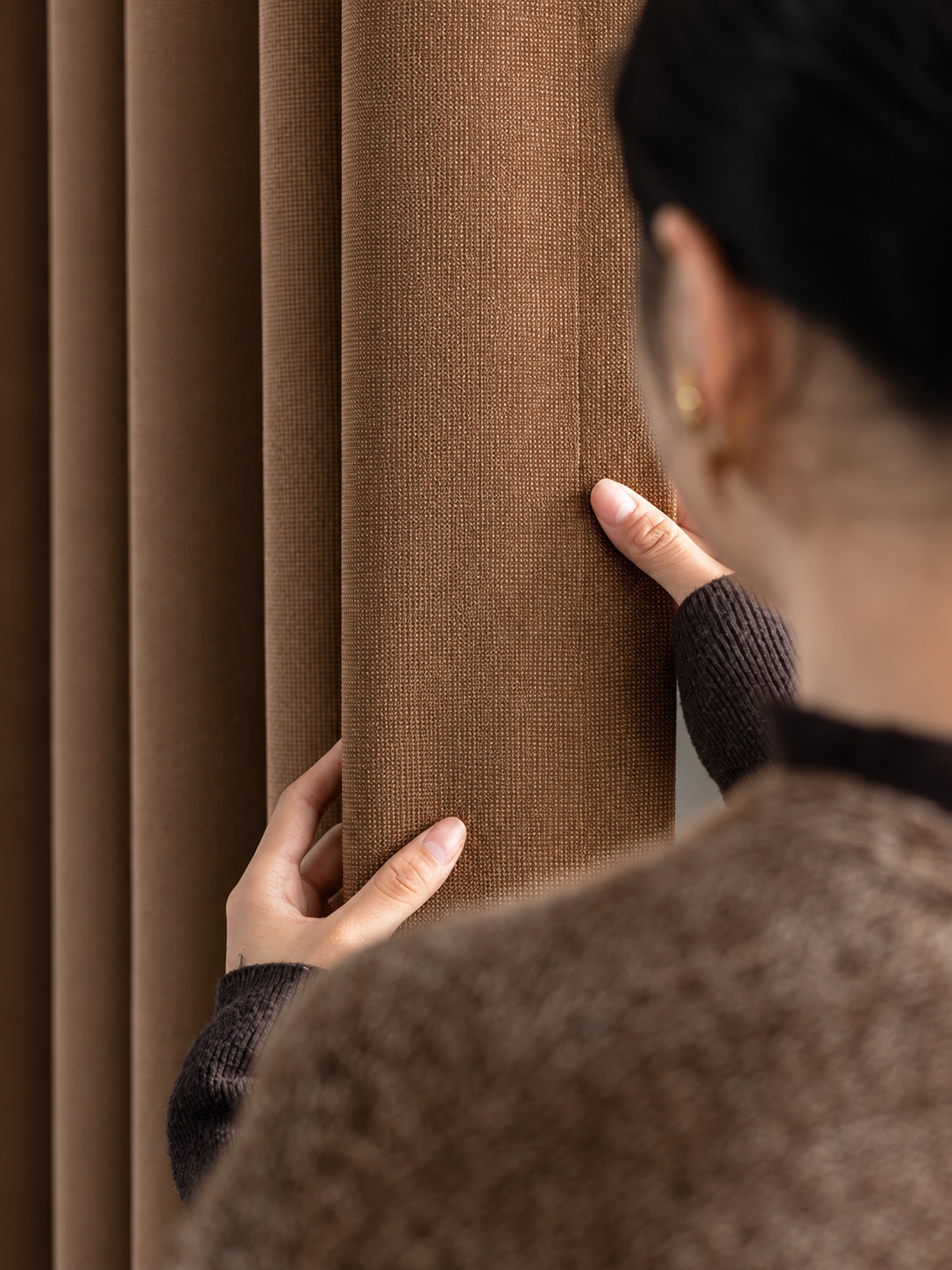
The featured photograph shows someone holding brown curtain fabric between their hands. Fine, closely spaced surface detail is visible on the front fold, while the folds behind it appear lighter or darker. It is a useful example of what a close-up contributes to a shopping decision: a clear look at the surface, with only a partial view of the finished curtain.
Start by identifying the photographed option
Before comparing textures, check which fabric and color the image represents. A listing may show several options, a styled room, and detail views together. Do not assume every photograph represents the option currently selected in the order form. Keep the product name and chosen color beside your notes as you review the gallery.
If the connection is unclear, ask which images correspond to your selection. A similar brown or a similar surface is not enough to establish that two pictures show the same curtain. This small identity check makes the rest of the comparison more useful and helps prevent ordering a different option from the one you admired.
Use the close-up to describe what you can see
Look for the arrangement of visible lines, small variations in tone, and any larger decorative motif. In the featured image, the fine surface detail is more noticeable on the forward-facing fabric than in the background. Describe that observation as a textured brown appearance rather than assigning a fiber or fabric category.
Separate surface detail from material names
A photograph can help you decide whether you like a fine, irregular, smooth-looking, or prominently patterned surface. It cannot let you feel that surface. Even a picture showing someone holding the fabric does not establish softness, thickness, or comfort against the skin.
Use the selected listing to confirm its actual composition and construction. If the listing uses a descriptive term such as linen-look, preserve that distinction when making comparisons. Write down both what you see and what the product information confirms, keeping them separate until you have the answers you need.
Notice how much of the fabric is visible
A tight crop gives detail more space on your screen. The same fine marks may be less prominent when you step back from a full window. Hands or nearby furnishings provide visual context, but they do not supply reliable measurements. Use stated dimensions and ordering guidance for size decisions.
After looking closely, return the image to its normal gallery size. Decide whether you like the overall impression as well as the enlarged detail. If a pattern extends beyond the crop, find a wider view before deciding how repetitive or bold it will look.
Read folds as part of the presentation
The brown panel in the photograph has a brighter forward surface and darker areas between folds. Look across several folds before deciding the fabric's overall color character. Selecting only the brightest ridge or darkest recess gives you an incomplete reference for the panel.
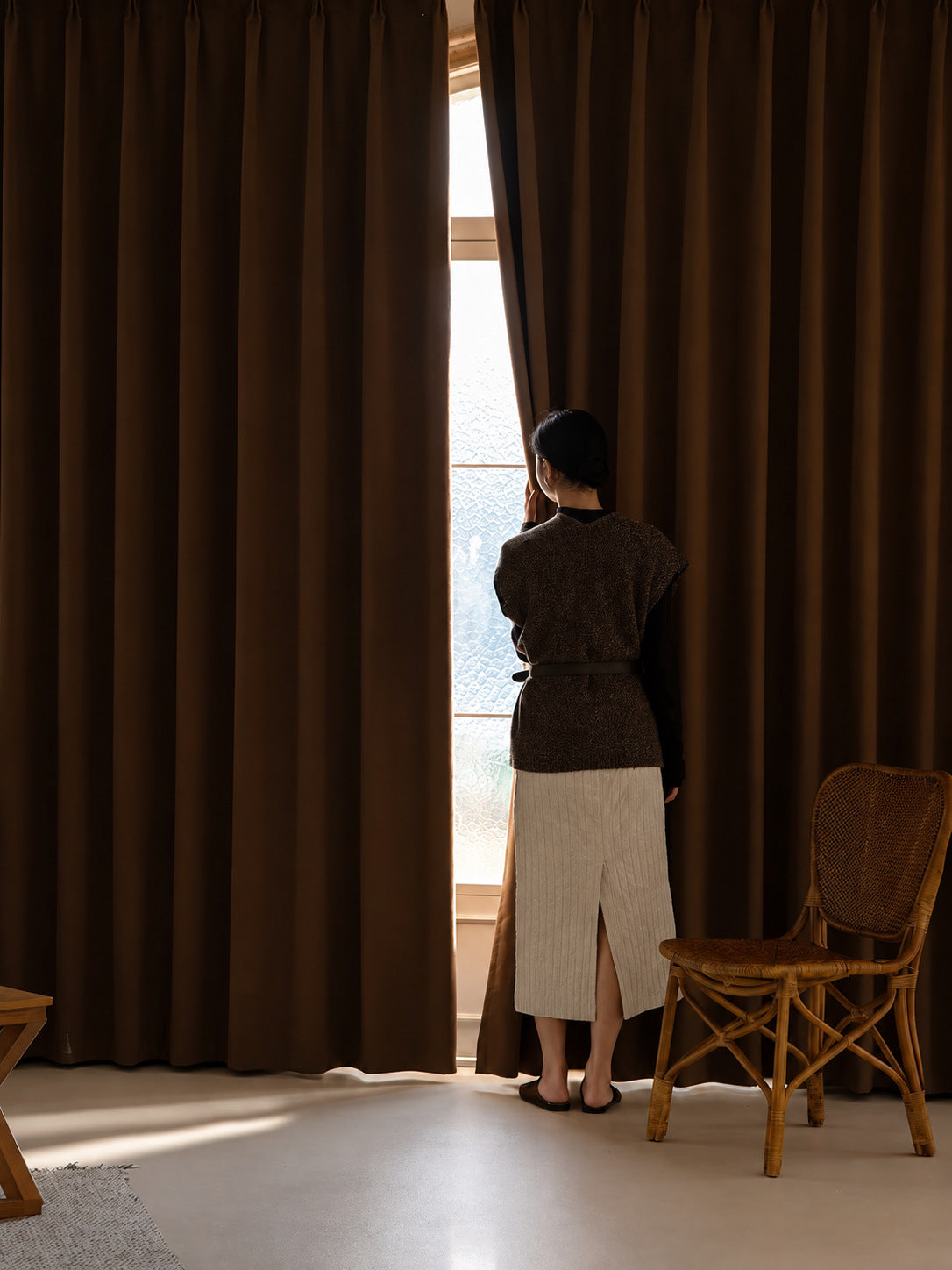
Next, find a photograph of the curtain hanging without someone holding it. A hand creates a local bend; it does not show the full panel's finished shape. Compare the visible header, the distribution of folds, and the lower edge when those details are shown. Note any missing view instead of trying to reconstruct it from the close-up.
The curtain fullness guide explains the separate relationship between fabric width and gathered appearance. Use the selected product's order instructions for your configuration rather than treating the photographed folds as a width formula.
Move from the detail view to the whole room
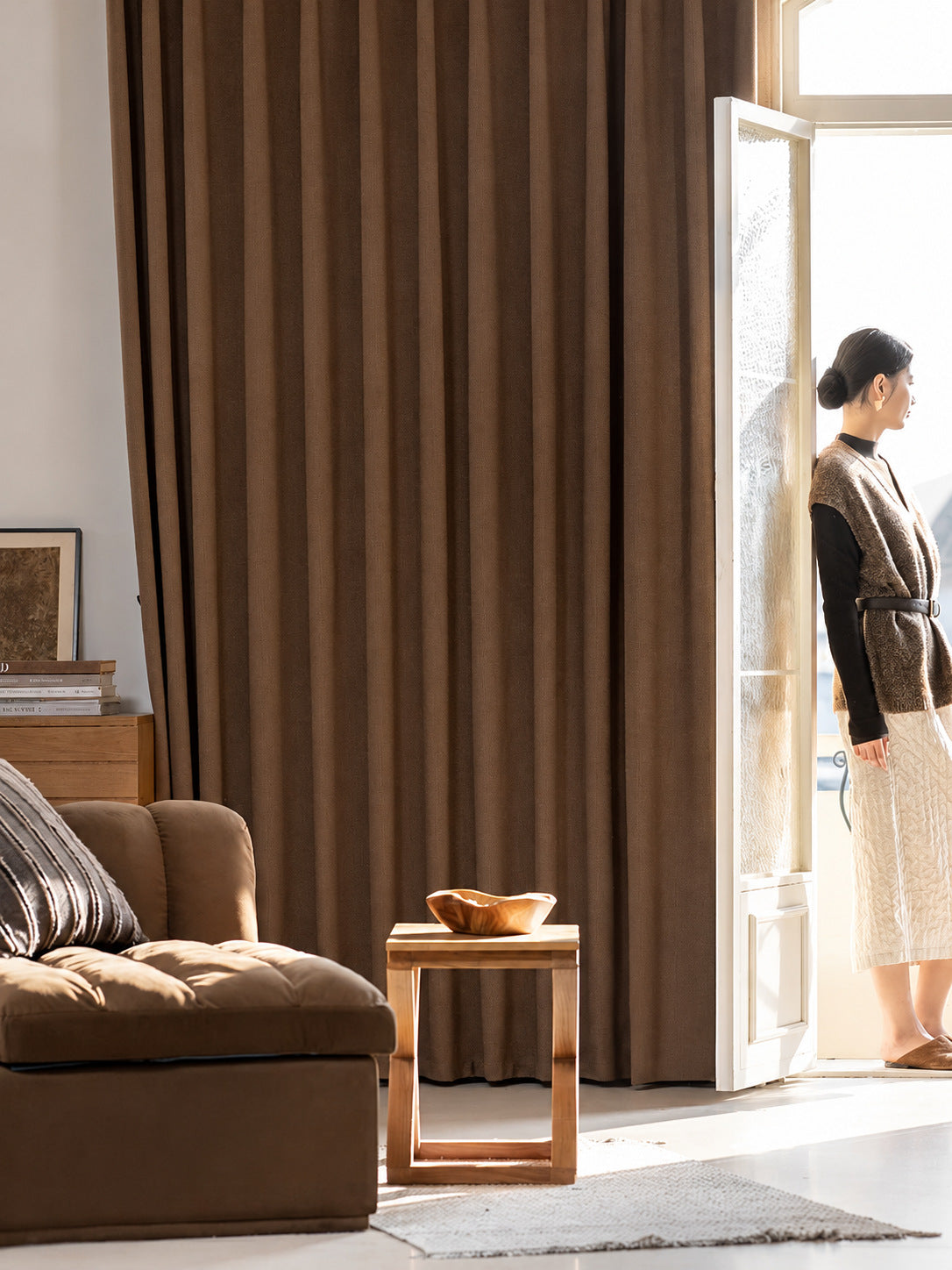
A room photograph answers a different question: how much attention does the window treatment attract among the wall, furniture, and floor? Look at the curtain from that broader perspective before deciding that a favorite close-up will suit your space. A fine texture may serve as a quiet background, while a larger motif may remain a focal point.
Compare that impression with your own room's fixed elements. If your upholstery and rug already have pronounced detail, consider whether the curtain adds an appealing layer or makes the combination feel crowded. Use the photograph to choose a direction, then check the actual fabric beside the finishes you plan to keep.
Turn the gallery into a short question list
Make three columns in your notes: visible detail, confirmed information, and unanswered questions. For the featured image, visible detail includes brown color, fine surface marks, and vertical folds. Fiber content, cleaning instructions, and the exact available color name belong in the confirmed column only when the current listing supplies them.
Useful questions include whether a wider panel view is available, whether the chosen sample matches the photographed option, and which header appears in the room image. Ask about the missing point directly. This is more productive than asking whether a fabric is simply “good quality,” which leaves your actual concern undefined.
When color or touch will determine your choice, review the current options for LUXVELUM Curtain Fabric Swatches. Confirm that the available swatch corresponds to your selected curtain. Then follow the guide to evaluating curtain fabric samples at home for the next stage of the decision.
Common photo-shopping mistakes
- Choosing from a single crop. Review the detail, hanging panel, and room view together whenever available.
- Reading a hand-held fold as a softness test. Assess touch with the appropriate sample and verify the product description.
- Assuming a dark panel proves blackout. Check the exact product's stated light-control features separately.
- Copying the styled room's measurements. Measure your own window and follow the chosen product's ordering definitions.
- Losing track of the selected option. Save the exact product and color names with your comparison notes.
Frequently asked questions
Can a close-up tell me whether curtains will feel soft?
No. It shows the surface's appearance, including visible lines and texture. Check the current description and obtain the corresponding physical sample when feel is a deciding factor.
Why does one curtain look like several shades of brown?
Different parts of a fold can face the light differently. Review the whole panel and other views before interpreting every tonal change as a separate color or decorative stripe.
Should I choose curtains from the close-up or the room photo?
Use both for different decisions. The close-up helps you assess visible detail; the room view helps you judge prominence and scale. A hanging-panel view connects the two by showing more of the curtain itself.
What if the gallery does not show the detail I need?
Pause the selection and ask about that specific point before ordering. Keep your product and color choice identified so the answer relates to the curtain you intend to buy.
Once the images, product information, and sample answer your main questions, return to Luxvelum custom curtains to complete the separate choices for dimensions, header, and panel arrangement. A useful gallery starts the selection process; your own room and the exact order details finish it.