Best Window Treatments for Bedrooms: Privacy and Light Control
Direct answer: The best bedroom window treatment is the one that matches your actual sleep, privacy, and daylight needs. Choose a blackout shade when reducing incoming light is the first priority, a room-darkening curtain when you want substantial light reduction with a softer decorative look, or a light-filtering treatment when gentle daytime light matters more than darkness. For more flexibility, layer treatments and plan the mount so the entire window works as a system.
A bedroom window has several jobs. It may need to manage early sunlight, streetlights, nearby buildings, changing privacy after dark, and the visual mood of the room. No single material is automatically right for every bedroom. Start with the conditions at your window, then compare the exact product rather than relying on color or category alone.
Begin With the Bedroom's Real Light and Privacy Problems
Notice which light interrupts the room
Look at the bedroom at the times when light is least welcome. Morning sun may enter through the fabric, while a streetlight may be most visible around the sides of a shade. Hallway light can also enter around an interior-facing window or door. Identifying the source helps you decide whether the main issue is material opacity, perimeter coverage, or both.
Check privacy after dark
Daytime privacy and nighttime privacy are different. When the bedroom is brighter than the outdoors, a sheer or some light-filtering materials may reveal more than expected. Stand outside the window after dark with the bedroom lights on, where practical, or assess the view from the neighboring sightline.
Decide how much daylight you want when awake
A bedroom does not always need to stay dim. You may prefer soft daylight while dressing, reading, or starting the day. If so, consider a layered plan that lets one treatment manage daytime light and another create stronger privacy and darkness when needed.
Compare the Main Bedroom Window Treatment Options
Blackout roller shades create a simple sleep-first base
A blackout roller shade uses an opaque material on a compact roller format. It is a strong starting point for light-sensitive sleepers, rooms facing bright exterior lighting, or bedrooms where a clean window profile is preferred. The current roller shades collection includes different light-control directions, so confirm the selected fabric rather than assuming every roller shade is blackout.
The LuxVelum Classic Blackout Roller Shades listing describes a dual-coated polyester blackout fabric and positions the product for bedrooms. Blackout describes the material's light-control role; it does not mean an installed room will have no visible light at the edges.
Cellular shades add a softer profile
Cellular shades use pleated material that forms horizontal air cells when lowered. They can suit a bedroom when you want a textile-like shade rather than a flat roller surface. The honeycomb cellular shades collection includes blackout and lighter-filtering directions, making the exact material choice essential.
The current LuxVelum Custom Blackout Honeycomb Cellular Shades listing offers a blackout option in a honeycomb construction. Read the current option names and product instructions before ordering because the same general shade family can include materials with different light-control results.
Room-darkening curtains balance function and softness
Curtains add color, texture, and visual height while reducing light across a broad area. A room-darkening curtain can make a bedroom noticeably dimmer and improve privacy, but it should not be described as equivalent to blackout. Browse the current bedroom curtains collection by both style and light-control label.
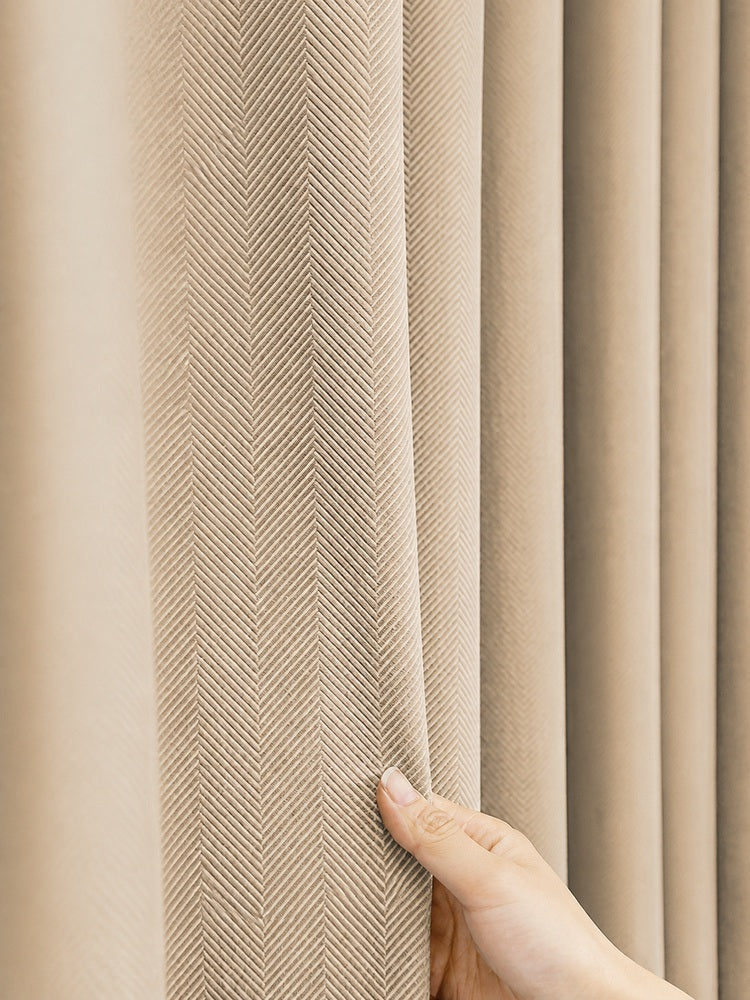
For example, the Herringbone Velvet Room-Darkening Custom Curtain listing describes a velvet-touch herringbone texture, a substantial drape, and room-darkening light control for privacy and reduced daylight. Those statements apply to that product; they should not be generalized to every velvet or custom curtain.
Layering gives the bedroom more than one mode
A layered window can support soft daytime light and stronger nighttime coverage. A sheer can sit closer to the glass while a room-darkening curtain faces the room, or a shade can provide the functional base behind decorative curtains. Independent movement is valuable because you can open one layer without giving up the other. See the guide to layering sheer and room-darkening curtains for a more detailed plan.
Use Light-Control Terms Precisely
Blackout is the strongest material category
Blackout materials are designed for the strongest light reduction. Final room darkness still depends on coverage, mount, window geometry, installation, and light around the perimeter. Treat blackout as an important material specification, not a promise about the entire room.
Room-darkening reduces light without making a blackout promise
Room-darkening curtains and shades reduce incoming light and often suit bedrooms that do not require the strongest possible dimming. Their softer performance can be a good match when you want a decorative textile and a darker room but still accept some ambient light.
Light-filtering and sheer materials preserve daylight
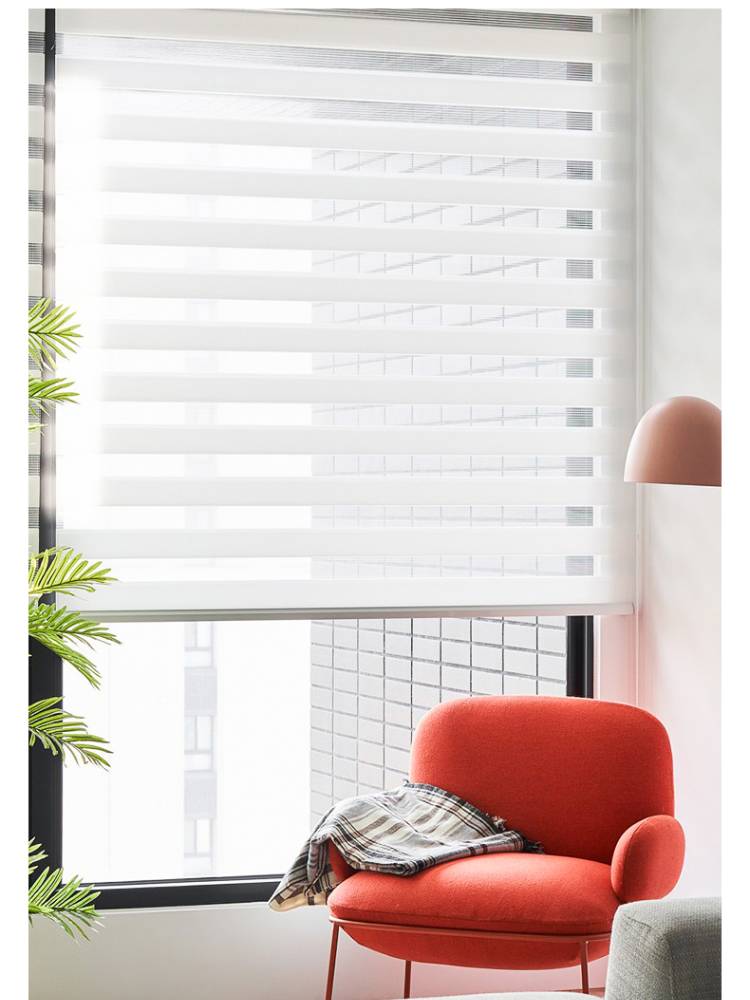
Light-filtering treatments soften daylight while keeping the room brighter. Sheer materials are a more transparent light-filtering direction and are best treated as a daytime layer, not a dependable nighttime privacy barrier. Review the full comparison of blackout, room-darkening, and light-filtering treatments if a listing's terminology is unclear.
Plan Privacy as a Day-and-Night Requirement
Start with material opacity
An opaque blackout or room-darkening material is the conservative choice when the bedroom faces a street, shared outdoor area, or nearby home. Slatted blinds can redirect views, but their privacy depends on slat position and the observer's angle. A sheer may obscure details in some daylight conditions while becoming less private after interior lights turn on.
Then consider the uncovered edges
Even an opaque center panel cannot cover space it does not reach. Look at the top, bottom, and sides of the opening and consider how the planned mount overlaps them. Curtains also need enough coverage when closed, while shades need a fit that suits the selected mounting approach.
Keep daytime use flexible
If the bedroom doubles as a dressing area, reading corner, or daytime workspace, a single blackout treatment may feel too binary. Layering or a material with adjustable light control can give you privacy without keeping the room closed throughout the day.
Choose the Mount and Coverage Before Ordering
Inside mounts keep the treatment within the opening
An inside-mounted shade can look integrated and leave surrounding trim visible. It also places the shade within the opening, so visible edge light may remain. Confirm that the opening and product requirements support this approach before choosing it for a sleep-sensitive room.
Outside mounts can extend beyond the opening
An outside-mounted shade can cover more of the area around the window when planned correctly. That may help with visible edge light, but the result depends on the actual wall space, obstructions, hardware, and product instructions. Use the guide to inside mounts versus outside mounts to compare the tradeoffs.
Curtain hardware shapes the finished coverage
Curtain width, return, header, rod or track position, and how the panels meet all affect coverage. Decorative choices and functional choices are connected: a beautiful curtain that cannot close across the needed area will not solve the bedroom's privacy or light problem.
A Practical Bedroom Selection Process
Observe the window in morning, afternoon, and evening conditions
Record when light enters, where it appears, and when privacy changes. Note nearby buildings, exterior lighting, trim, handles, and furniture that may affect the treatment. This creates a short functional brief for the window.
Choose the required nighttime baseline
Decide whether the baseline is blackout, room-darkening, or ordinary privacy with softer daylight. Use the exact label from the product description and verify that it matches your goal.
Decide whether one treatment can do the job
A single shade may be enough for a simple sleep-first window. A layered system is more suitable when you want different daytime and nighttime modes, decorative curtains, or additional control over views and daylight.
Verify the exact product and image
Read the current product description, option names, operating method, and installation guidance. Confirm that the image and selected material represent the product you intend to order. Do not transfer a feature from one LuxVelum product to another item or to the whole category.
Measure for the selected product and mount
Measurement should follow the current instructions for the exact treatment. Do not reuse a curtain measurement for a shade or assume that two shade models have identical requirements. The guide to measuring windows for custom treatments explains the planning sequence.
Common Bedroom Window Treatment Mistakes
Treating a dark color as proof of blackout
Color alone does not establish the light-control category. A dark light-filtering fabric and a pale blackout material can perform very differently. Use the product's actual material description.
Relying on a sheer for nighttime privacy
A sheer is designed to preserve and soften daylight. It may not screen a lit bedroom from exterior views after dark. Pair it with an opaque layer when nighttime privacy matters.
Ignoring edge light
Blackout material addresses light through the treatment, not every gap around it. Plan the mount and coverage at the same time as the material choice.
Assuming one bedroom solution fits the whole home
A quiet rear bedroom may need less light control than a street-facing primary bedroom. Repeat colors or textures for continuity, but let each room respond to its own light, view, and privacy conditions.
Frequently Asked Questions
What type of window treatment is best for a dark bedroom?
Start with a blackout shade or another treatment whose exact listing identifies it as blackout. Then plan the mount and perimeter coverage, because light around the edges can remain even when the material is opaque.
Are room-darkening curtains enough for a bedroom?
They can be enough when you want reduced daylight and privacy without requiring the strongest light control. If early sun or exterior lighting interrupts sleep, compare them with blackout options under the actual room conditions.
Can I use sheer curtains in a bedroom?
Yes, especially as a daytime layer that softens light. Add an opaque shade or curtain when you need stronger nighttime privacy or darkness.
Are roller shades or cellular shades better for bedrooms?
Neither format is universally better. Compare the exact material, desired appearance, stack or roll profile, mount, operation, and privacy needs. A blackout roller shade and a blackout cellular shade can both be bedroom candidates while creating different visual effects.
Should bedroom curtains be layered over a shade?
Layering is useful when the shade provides the functional light-control base and the curtains add softness, broader visual coverage, or another daytime mode. It is optional when one treatment already meets the room's practical and decorative needs.
Final Bedroom Checklist
Choose the light-control category first, test privacy after dark, plan the mount and edge coverage, and decide whether you need one mode or several. Then verify the exact product description and measure for that treatment. A bedroom window works best when material, coverage, privacy, operation, and style are considered together.