How to Clean and Care for Curtains, Shades and Blinds
Direct answer: Clean curtains, shades, and blinds by identifying the exact material and construction first, checking the current care label or product instructions, removing loose dust with the gentlest approved method, and treating spots only when the instructions allow it. Do not assume that a washable curtain, a fabric Roman shade, a cellular shade, and a wood or metal blind can share one cleaning method. When directions are missing or a treatment has backing, layered fabric, delicate trim, or an unknown finish, ask the seller or a qualified cleaner before adding moisture, detergent, steam, or heat.
A practical care routine protects more than appearance. It also keeps dust from becoming embedded, reduces the temptation to scrub a small mark aggressively, and gives you a chance to notice loose hardware or uneven operation before it becomes a larger problem. If you are still comparing structures, start with the curtains, shades, and blinds guide; this article focuses on care after the treatment is installed.
Start by identifying what you are cleaning
Name the treatment structure
Curtains hang as flexible panels. Roller shades wrap around a tube, cellular shades expand into pleated cells, and Roman shades gather into fabric folds. Blinds use repeated slats that tilt. Those structures create different edges, creases, pockets, and moving parts, so cleaning access changes even when two treatments have a similar color.
Confirm the exact material and finish
Read the sewn-in label, packaging, order record, or current product page. Look for fiber content, backing, coating, trim, slat material, and any stated care method. “Fabric,” “wood look,” and “metal” are not specific enough. A polyester curtain can have decorative yarns or layered construction, while a faux-wood slat and a finished natural-wood slat respond differently to moisture.
Separate light control from care
Sheer, light-filtering, room-darkening, and blackout describe light behavior; they do not provide cleaning instructions. Two blackout products may use different surfaces or backings, and two sheer curtains may use different weaves. Keep the performance label and the care label as separate pieces of information.
Use a low-risk routine for regular upkeep
Check the instructions before gathering supplies
Start with the product directions rather than a general household hack. Confirm whether gentle vacuuming, dry dusting, a damp cloth, spot cleaning, washing, steaming, ironing, or professional cleaning is allowed. If a method is not stated, do not treat silence as permission.
Remove loose dust before treating marks
Loose dust is easier to remove before it mixes with moisture. If approved for the material, use a clean microfiber cloth, a soft duster, or a vacuum with suitable low suction and a clean attachment. Work from the top downward so released dust does not settle on a finished section.
Test any approved damp method discreetly
Even when the instructions permit spot care, test the method on a hidden edge or inconspicuous area. Check for color transfer, rings, texture change, or finish dulling after the area has dried. Use as little product as the instructions require, and keep liquids away from motors, headrails, control mechanisms, and electrical components.
How to care for curtain panels
Support the fabric while removing surface dust
If the label permits vacuuming, support the curtain and use a clean fabric attachment with gentle suction. Pay attention to upper folds, hems, leading edges, and the side nearest an open window. Avoid pulling a heavy panel toward the nozzle or dragging an attachment across raised yarn, fringe, or decorative trim.
Launder only when the exact curtain allows it
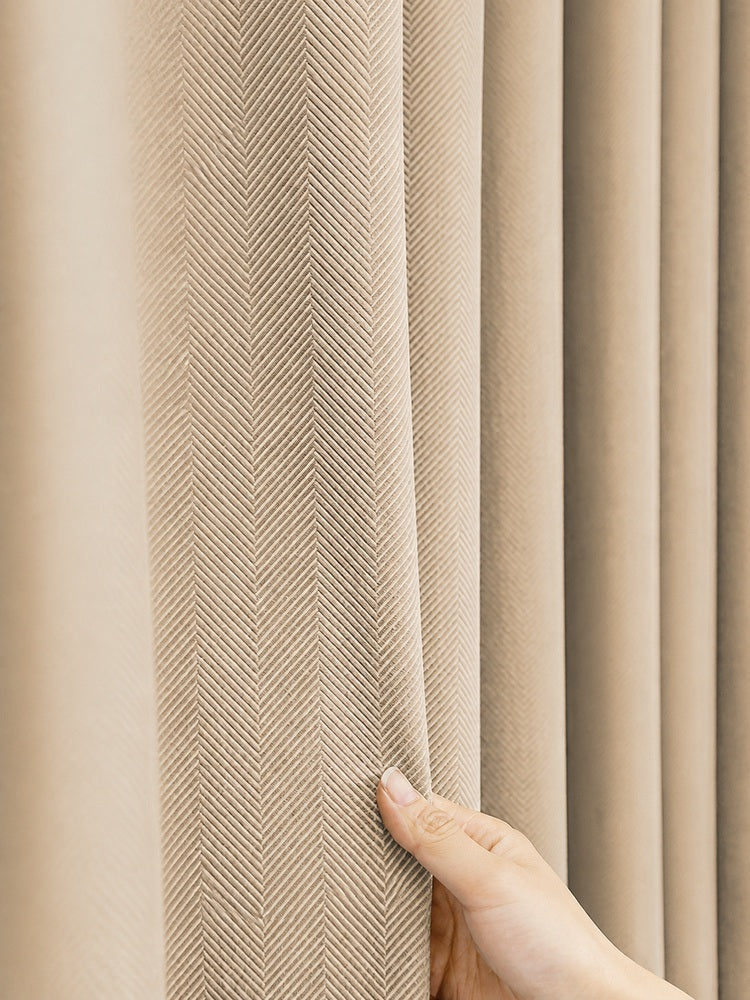
Do not infer washability from fiber content alone. Linings, interlinings, jacquard construction, chenille yarn, coatings, headers, and trims can change the appropriate method. Remove hooks or detachable hardware only as directed, follow the stated water and drying instructions, and avoid experimenting with heat. The chenille curtain guide explains why textured fabric care must remain product-specific.
Restore the hang without forcing the fabric
After approved cleaning, let the panel return to its intended hang and confirm it is fully dry before stacking it tightly. Dress folds gently with clean hands. If creases remain, use steam or an iron only when the label permits the method and setting; otherwise ask the seller or a fabric-care professional.
How to clean roller, cellular, and Roman shades
Keep roller-shade care even and controlled
Lower a roller shade enough to create a stable working surface without overextending it. Remove loose dust using the approved method and avoid pressing sharply into the fabric or screen. Do not soak the lower bar, cassette, tube, or chain mechanism. If spot cleaning is allowed, use a light touch and avoid leaving a sharply defined wet edge.
Protect cellular pleats from crushing
Cellular shades rely on connected pleats and internal cells. Support the surface and follow the exact instructions for dust removal. Avoid squeezing the cells, forcing tools into openings, or saturating the material unless the manufacturer expressly allows a wet method. The current cellular shade guide can help you identify the structure before care.
Clean Roman folds without distorting them
Roman shades combine fabric with cords, rings, battens, or other supporting elements. Dust the visible face and folds only as the product permits, supporting the fabric rather than pulling on it. Do not remove or wash the fabric assembly unless the product instructions specifically describe that process. Review the Roman shades guide for the basic fold structure.
How to care for wood, faux-wood, and aluminum blinds
Dust slats in a stable position
Lower the blind and tilt the slats to a reachable angle without forcing them tightly closed. Support slats as you work and use the approved soft, dry tool. Reverse the tilt to reach the other face. Avoid bending thin slats, tangling ladders, or placing weight on control cords and chains.
Keep material-specific claims attached to the product
Luxvelum currently describes its Custom Faux Wood Venetian Blinds as using moisture-resistant composite slats that wipe clean. The current aluminum model is separately described as having a powder-coated finish that is easy to clean. Those statements support consideration of those exact products; they do not mean that every faux-wood or aluminum blind accepts the same liquid, tool, or cleaning solution.
Use extra restraint with natural wood
Natural wood should not be treated as interchangeable with composite faux wood. Luxvelum's current TimberGlow blind is described as solid American basswood with a protective, moisture-resistant coating, but that does not make it waterproof. Follow the exact care directions, avoid unnecessary wetting, and dry any approved surface care promptly. The wood versus faux-wood guide provides a product-specific material comparison.
Handle spots and stains conservatively
Identify the mark before reacting
Fresh dust, a water mark, cooking residue, pet contact, and an unknown stain are different problems. Blot rather than rub when the approved instructions call for spot care, and work without spreading the mark into a larger area. Avoid combining cleaners or using bleach, solvents, adhesive removers, or household sprays unless the product directions expressly allow them.
Know when to stop
Stop if color transfers, the finish changes, a ring forms, the texture mats, the backing separates, or the treatment no longer operates normally. A valuable, heavily soiled, layered, trimmed, or unusually constructed treatment may be better assessed by a qualified cleaner. The cost of advice is often lower than the cost of an irreversible experiment.
Do not overlook hardware and the window area
Clean around controls without soaking them
Dust headrails, brackets, rods, rings, chains, wands, and handles with the treatment supported. Use moisture only where the hardware instructions allow it. Never spray cleaner directly toward a motor, battery compartment, electrical connection, clutch, or enclosed mechanism.
Reduce the sources of repeat soil
Clean the sill, trim, nearby floor, and reachable glass so dust or residue does not immediately transfer back. Address condensation, cooking residue, and ventilation as room conditions rather than expecting the window treatment to absorb them. For exposed rooms, consult the kitchen and humid-space guide.
Common window-treatment care mistakes
- Using one method for every treatment: Construction, material, finish, backing, and trim can change the safe approach.
- Starting with moisture: Remove loose dust first when the product permits it.
- Assuming polyester means machine washable: The whole construction, not one fiber name, determines care.
- Scrubbing a small spot: Aggressive rubbing can spread a mark or change texture and sheen.
- Spraying installed hardware: Overspray can enter controls, headrails, motors, or nearby wall finishes.
- Forcing a slat, fold, or roll: Support the structure and stop if normal movement is blocked.
Build a simple maintenance habit
Use regular visual checks
Look for dust buildup, new spots, condensation exposure, loose fasteners, frayed cords, uneven folds, bent slats, and changes in operation. Early attention usually allows a gentler response. Keep the care label and order details where they can be found later, especially for custom treatments.
Match the treatment to the upkeep you can sustain
A heavily textured curtain, deep Roman folds, cellular pleats, and repeated blind slats create different maintenance work. When buying for another room, include access and routine care in the selection criteria. Browse custom curtains and shades and blinds only after deciding which surface and structure fit your household.
Frequently asked questions
Can I machine wash all curtains?
No. Washability depends on the exact fabric, lining, construction, header, trim, and care label. If machine washing is not clearly approved, ask before proceeding.
Can I use a damp cloth on every blind?
No. Faux wood, aluminum, finished natural wood, and other slat materials can have different limits. Follow the exact product instructions and test an approved method discreetly.
How should I remove dust from cellular shades?
Use only the method permitted for the specific shade, support the pleats, and avoid crushing or saturating the cells. Do not push tools into the internal openings.
Is steam safe for curtains and fabric shades?
Only when the product instructions permit it. Heat and moisture can affect fibers, coatings, backing, seams, trim, and shape, so do not infer steam safety from appearance.
When should I call a professional cleaner?
Consider professional advice when the care label is unclear, the stain is unknown or extensive, the treatment is layered or trimmed, color transfers during a discreet test, or an approved home method does not resolve the problem safely.
Care begins with the exact product
The safest sequence is straightforward: identify the structure, verify the material and instructions, remove loose dust gently, test any approved spot method, protect hardware, and stop when the result is uncertain. A careful routine helps curtains, shades, and blinds look orderly without turning a small maintenance task into avoidable damage.