What Are Chenille Curtains? Comfort, Texture and Care
Chenille curtains are curtains made with chenille yarn or fabric, known for a soft, raised surface that gives the window a warm, tactile look. The word chenille describes texture; it does not, by itself, tell you whether a curtain is sheer, light-filtering, room-darkening, or blackout. To choose well, compare the exact fabric, light-control description, construction, color, drape, and care instructions for the product you are considering.
That distinction matters because two chenille curtains can feel very different. One may have a subtle, low-contrast surface and relaxed folds, while another may combine chenille yarn with a woven pattern, a fuller body, and decorative trim. Start with the texture you want, then verify the performance and maintenance details separately.
What does chenille mean in curtains?
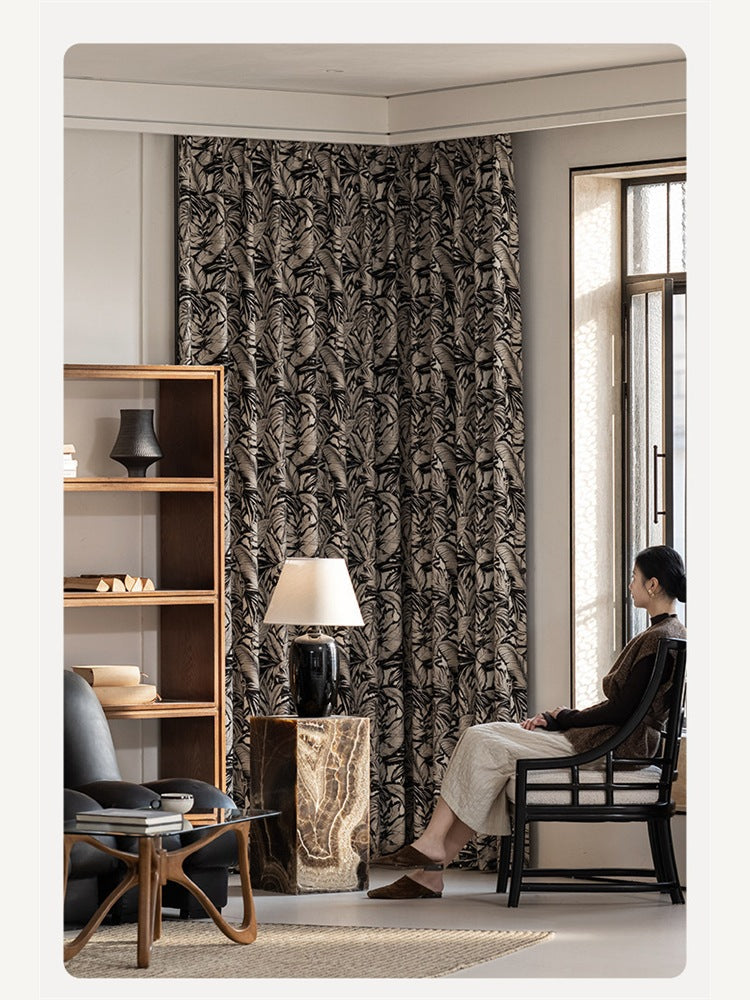
Chenille is associated with a fuzzy, plush yarn and the dimensional surface that yarn creates in a textile. In curtains, that surface can make a solid color appear richer and can give a woven motif more depth. The effect is visual as well as tactile: raised fibers catch light differently as you move through a room.
Chenille is a texture, not a light-control rating
A soft, substantial-looking curtain is not automatically blackout. Fiber, weave, layers, lining, color, and construction all influence how a finished curtain manages daylight and privacy. Read the product’s stated category instead of estimating performance from a close-up photograph.
For example, Luxvelum currently describes the Maupassant Reversible Chenille Jacquard Room-Darkening Curtain as room-darkening. That product-specific description should not be expanded into a claim that every chenille curtain is room-darkening—or that this curtain is blackout.
Chenille and jacquard can appear in the same curtain
Chenille and jacquard answer different questions. Chenille refers to the yarn or soft surface character. Jacquard refers to a pattern woven into the textile rather than printed onto its surface. A curtain can be chenille, jacquard, both, or neither. If woven pattern is your main concern, read the companion guide to jacquard curtains, pattern, texture, and drape.
Why choose chenille curtains?
Soft texture adds visual warmth
Chenille’s raised surface can soften the look of a room filled with hard materials such as glass, stone, metal, or smooth cabinetry. It offers texture without requiring a bold print. In a quiet palette, that can help the window feel finished while keeping the overall room calm.
Color can look more dimensional
A flat fabric tends to reflect light more evenly. Chenille’s surface creates small shifts in highlight and shadow, so ivory, gray, green, blush, or blue may appear nuanced rather than visually flat. Always review both a room scene and a close-up image, because screen color alone cannot show the full texture.
A fuller-looking fabric can frame the window
Chenille curtains often appeal to shoppers who want the window treatment to contribute softness and presence. The final effect still depends on the individual fabric, panel plan, header, hardware, and finished dimensions. Texture cannot compensate for a panel plan that does not suit the intended coverage.
How to evaluate chenille curtain texture
Look at close-ups and room views
A close-up should help you judge the height and density of the surface, the clarity of any woven motif, and the character of the trim. A wider room view shows whether those details remain subtle or become a focal point from normal viewing distance. Use both before deciding.
Compare the front, reverse, and edges
If a product is described as reversible, check what that means for the actual design. Review the two faces, edge treatment, hem, and how the pattern changes from side to side. Reversible construction is a product attribute, not a universal feature of chenille.
Notice how the surface changes with light
Texture may look stronger in side light and quieter in diffuse light. Examine product images taken from more than one angle. If you are deciding between close colors, a fabric sample is the most useful way to assess the surface in your own daylight and evening lighting.
How to choose chenille curtains step by step
1. Define the room’s practical need
Decide whether your priority is softening glare, increasing daytime or nighttime privacy, darkening the room, adding decorative texture, or combining several goals. Then use the exact product description to confirm light control. The guide to blackout, room-darkening, and light-filtering window treatments explains why those labels should not be used interchangeably.
2. Choose a texture and pattern scale
For a room with prominent rugs, art, or upholstery, a tonal chenille may add depth without competing. In a simpler room, a larger woven motif or distinctive trim can give the window more character. Judge the whole elevation of the wall, not only a small fabric detail.
3. Compare color in context
Place warm neutrals, cool neutrals, and accent colors against the room’s wall color, flooring, and major furniture. Chenille can make slight undertones more visible because light moves across the pile. When possible, compare a sample at the window during the times of day that matter most.
4. Plan drape, fullness, and length
Confirm how the seller defines ordered width, finished width, panel quantity, header style, and finished length. A textured fabric still needs an accurate plan for coverage and folds. Use the curtain fullness guide to separate panel width from the finished span you want to cover.
5. Confirm care before ordering
Care varies by fiber, weave, backing, trim, and construction. Check the current care label or product instructions for the exact curtain. If washing, drying, steaming, or professional cleaning directions are not published, ask the seller rather than assuming a method is safe.
A verified Luxvelum chenille example
The current Luxvelum catalog offers the Maupassant curtain as one option within the chenille curtains collection. Its catalog description identifies a reversible chenille jacquard construction, a tonal leaf-inspired pattern, braided pom-pom trim, and a tailored hem. It is described as room-darkening and uses polyester in its construction.
The same description identifies a three-layer woven construction and lists Latte, Ivory, Vintage Green, Gray, Blush, and Sky Blue. Those facts apply to the Maupassant product. They should not be treated as standard colors, construction, or performance for the entire chenille category.
This example also shows why material and pattern terms should be read together. “Chenille” communicates the soft surface; “jacquard” identifies the woven pattern approach; “room-darkening” states the product’s light-control category. Each term contributes different information.
How to care for chenille curtains without guesswork
Follow the product instructions first
Start with the sewn-in care label and the seller’s current instructions. Do not assume that every chenille curtain can be machine washed, tumble dried, ironed, or steamed. A method that works for one construction may affect another fabric, backing, edge, or decorative trim differently.
Use a conservative routine between deeper cleanings
Keep the surrounding sill, floor, and hardware clean so loose dust is less likely to transfer to the fabric. If the product instructions allow gentle surface care, work carefully and avoid crushing or pulling the raised yarn. Test any unfamiliar method in an inconspicuous area first.
Address uncertainty before a stain spreads
When a spot, odor, or large area needs treatment, identify the fiber and review the exact instructions before applying moisture, heat, or cleaning products. If the label is unclear or the curtain includes layered construction or trim, contact the seller or a qualified fabric-care professional.
Common chenille curtain mistakes
Assuming chenille means blackout
Texture does not establish a light-blocking category. Verify whether the exact product is sheer, light-filtering, room-darkening, or blackout.
Choosing from a distant room photo alone
A room scene helps with scale, but it may hide pile, woven detail, and trim. Pair it with close-ups and, when practical, a sample.
Treating all chenille as the same material
Chenille describes a surface or yarn character, while fiber content and construction vary. Check the product-specific composition and care guidance.
Ignoring hardware and panel planning
A richly textured fabric cannot fix an unsuitable rod position, header choice, panel quantity, or finished dimensions. Complete the measurement and installation plan before ordering.
Frequently asked questions
Are chenille curtains always heavy?
No. Chenille is associated with a soft, raised surface, but finished weight and body depend on the exact yarn, weave, layers, dimensions, and construction. Review the specific product rather than relying on the category name.
Are chenille curtains blackout?
Not automatically. Chenille describes texture, not light control. Look for an explicit sheer, light-filtering, room-darkening, or blackout description for the exact curtain.
What is the difference between chenille and jacquard curtains?
Chenille refers to the soft, dimensional yarn or surface. Jacquard refers to a pattern woven into the textile. One curtain can combine both characteristics.
Can chenille curtains be washed at home?
That depends on the product. Follow its care label and current seller instructions. If a safe washing method is not stated, ask before using water, heat, or a cleaning product.
Where do chenille curtains work best?
They can suit bedrooms, living rooms, dining areas, and other spaces where soft texture supports the design. Room suitability also depends on the exact light-control need, privacy goal, care requirements, hardware, and installation plan.
Final takeaway
Choose chenille curtains for their tactile surface and visual warmth, then verify performance separately. Compare close-ups, room views, color, woven pattern, light-control category, construction, measurements, and care instructions. For a broader planning framework, use the custom curtains buyer’s guide before finalizing your order.