Blinds vs. Shades: Understanding the Key Differences
Short answer: Blinds use separate slats that can tilt, while shades use a continuous or connected surface that raises and lowers as a unit. Choose blinds when changing the angle of light and sightlines is your priority. Choose shades when you prefer a unified surface, straightforward vertical coverage, and a wider choice of flat, pleated, or folded profiles.
The names describe construction, not a guaranteed level of darkness, privacy, durability, or care. Those results depend on the exact material, design, mount, and fit. If you are still deciding among curtains as well, begin with the broader curtains, shades, and blinds comparison. This guide focuses closely on the two treatments that usually sit nearest the window.
The defining difference is how the surface moves
Blinds move in two ways
A blind is made from repeated slats held together by cords, ladders, tapes, or another support system. The slats tilt to change their angle, and the blind can also be raised to expose more of the glass. That two-part movement is the category's clearest distinction.
Tilting gives you intermediate positions between uncovered and fully covered. The slats can be angled to redirect daylight, interrupt a direct view, or reduce reflection while the blind remains over the window. Raising the blind is a separate choice for a more open view.
Shades move as one connected treatment
A shade covers the window with a continuous sheet or a connected fabric structure. It may roll around a tube, compress into pleats, or gather into folds, but the covering moves vertically as one treatment. There are no individual slats to tilt.
This creates a clear coverage decision: lower the shade to cover more glass and raise it to reveal more. The material itself determines what happens while the shade is lowered. A light-filtering material, for example, behaves differently from a room-darkening or blackout material even though all three may use the same basic shade format.
Compare adjustment before comparing appearance
Blinds are useful for frequent small changes
Think about a window beside a desk or seating area where the sun angle shifts. A small change in slat angle can alter the path of daylight without removing all coverage. Blinds make sense when you expect to make those fine adjustments throughout the day.
Slats do not eliminate every bright line or side gap. Their geometry creates joints, overlaps, and openings that vary with the design and installation. A blind should therefore be chosen for controllable direction and sightlines, not because the category name promises blackout.
Shades are useful for simple coverage changes
A shade is often easier to understand at a glance: its height shows how much of the window is covered. That suits rooms where the main decision is open, partly lowered, or closed rather than repeated changes in light direction.
Some shade materials preserve a soft glow while lowered, while others are intended to darken the room. Check the exact product language and do not substitute 鈥渟hade鈥?for 鈥渂lackout.鈥?Luxvelum's guide to blackout, room-darkening, and light-filtering treatments explains why those labels must remain separate.
Understand the main blind and shade families
Venetian blinds share slatted geometry, not one material
Horizontal Venetian blinds may use aluminum, wood, or faux wood, but those materials should not be treated as interchangeable. They can differ in surface character, weight, cleaning guidance, and suitability for the room. The shared feature is the repeating slat that tilts.
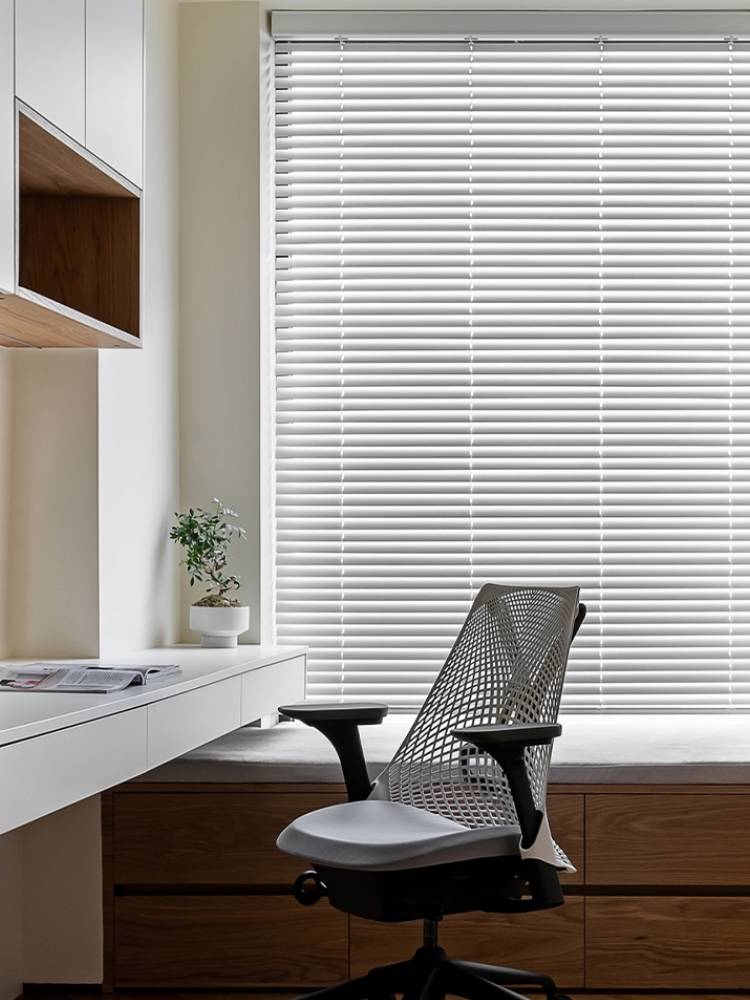
Luxvelum's current Venetian blinds collection includes both aluminum and faux-wood options. The aluminum product is presented with a single-chain control, while the faux-wood product describes a wand control and moisture-resistant composite slats. Those are product-specific details; they do not apply automatically to every blind. The article image shows the current aluminum Venetian blind so the slatted structure is unmistakable. For a focused material, slat-control, and room-suitability checklist, read the Venetian blinds guide.
Roller shades create a flat plane
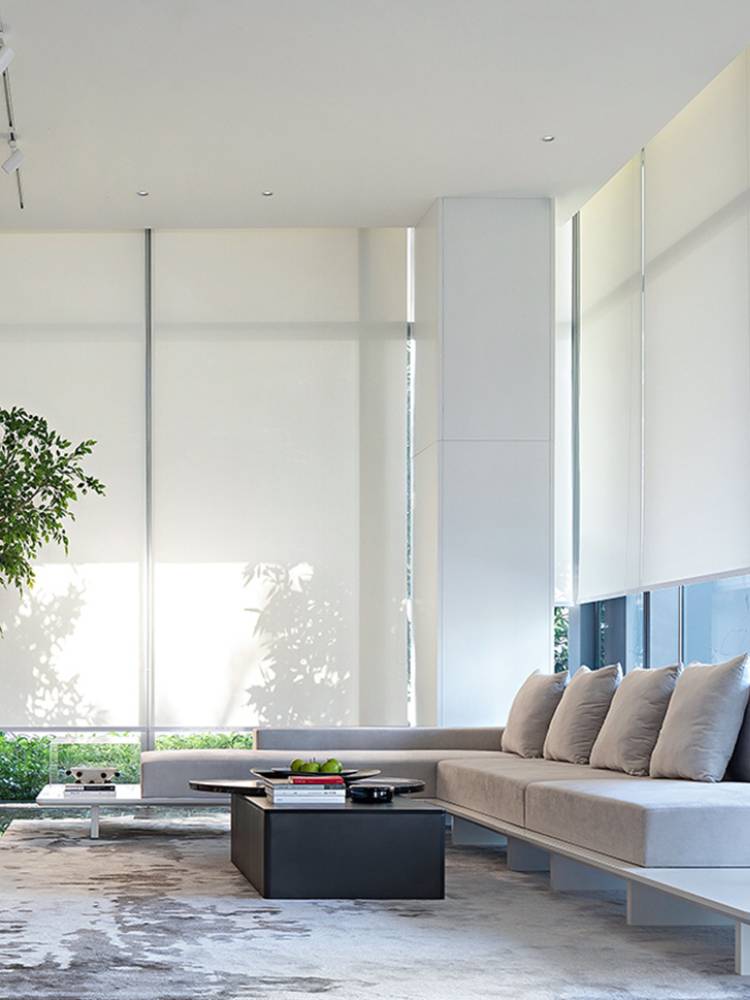
A roller shade uses a comparatively flat sheet that travels around a tube at the top. Its visual effect is clean and continuous, which can keep pattern and hardware quiet. The fabric or screen specification determines how it handles light and privacy.
Browse roller shades by reading the exact material and mount information rather than relying on color alone. Two fabrics in the same neutral color can behave very differently when sunlight reaches them. For a fuller selection process, use the roller shades buyer's guide to compare light control, privacy, mount, operation, and measurement readiness.
Cellular shades use connected pleats
Cellular shades compress into a pleated stack and expand into a structured surface when lowered. Their profile is more dimensional than a roller shade but still moves as one connected treatment. Luxvelum separates these into a honeycomb cellular shades collection, where the precise light-control option should be confirmed on the current product page. The cellular shade guide explains the category's light, privacy, insulation, mount, and fit decisions.
Roman shades form fabric folds
Roman shades bring a softer textile presence to the shade family. When raised, the material gathers into horizontal folds; when lowered, it presents a larger fabric surface. They can feel more decorative than roller or cellular shades without using side-stacking curtain panels. See the current Roman shades collection for Luxvelum's available structure and material. For a closer look at fabric, folds, light control, and fit, read the Roman shades style and structure guide.
Evaluate privacy and view as separate questions
Ask what happens during daylight
With blinds, privacy and view change with the slat angle. You may preserve some daylight while disrupting a direct sightline, but the result varies by viewing angle and distance. With shades, the lowered material becomes the viewing barrier. Its weave, color, and opacity influence how much light or detail remains visible.
Ask what happens after dark
Interior lighting changes the comparison. A treatment that feels private in daylight may reveal more after dark, especially if its material is sheer or highly light-filtering. Close the treatment as intended and assess it from outside the room before assuming it meets nighttime needs. For blinds, check the view through tilted and closed slats. For shades, check the actual fabric rather than the category label.
Mounting and fit can change the result
Inside mounts emphasize the opening
An inside-mounted blind or shade sits within the window recess when the opening and product permit it. This can preserve visible trim and create a contained profile. The window still needs enough usable depth, and projecting handles or hardware must not interfere with movement.
Outside mounts emphasize coverage
An outside mount attaches beyond the opening and can cover more of the surrounding area. It may be useful when recess depth is limited or when broader coverage is preferred. Mount choice also affects edge light, projection, and how the treatment aligns with nearby walls or furnishings.
Do not guess order dimensions from a general article. Follow the exact product's measuring fields and use the inside-mount versus outside-mount guide to identify the checks that belong in your plan.
Factor upkeep into the decision
Blinds expose more individual surfaces
Repeated slats create many edges and faces where dust can settle. They may be practical to wipe one section at a time, but the number of surfaces matters if the window is large or difficult to reach. Confirm the cleaning method for the exact slat material and finish, then use the material-first window-treatment care guide for a conservative upkeep routine.
Shade care depends strongly on material
A roller surface, cellular pleat, and Roman fabric fold do not collect or release dust in the same way. A shade may look visually simpler while still requiring material-specific care. Before ordering, check whether routine upkeep matches the room, access, and your willingness to clean folds or textured fabric.
Use this six-step selection sequence
- Define the daily adjustment. Decide whether you want slat tilt for directional control or simple up-and-down coverage.
- Name the required light behavior. Keep sheer, light-filtering, room-darkening, and blackout as distinct product specifications.
- Choose the visual profile. Compare linear slats with a flat, pleated, or folded shade surface.
- Check the mount. Confirm recess depth, obstacles, projection, and the exact product's measuring method.
- Review upkeep. Consider slat surfaces, pleats, folds, material guidance, and how easily you can reach the window.
- Read the current product page. Verify controls, material, opacity, dimensions, and installation details before ordering.
Common mistakes to avoid
- Calling every horizontal-looking treatment a blind: A banded or pleated shade may show horizontal lines without having tilting slats.
- Assuming every lowered shade behaves alike: Structure and material jointly determine light, privacy, and appearance.
- Extending one product claim to a category: A moisture-resistant faux-wood option does not make every blind suitable for the same conditions.
- Choosing by color before operation: A matching neutral finish cannot fix an adjustment style that feels awkward in daily use.
- Ignoring edge conditions: Mount, fit, trim, and surrounding light affect the finished result for both categories.
Frequently asked questions
Are blinds the same as shades?
No. Blinds use individual slats that tilt. Shades use a continuous sheet or connected fabric structure that raises and lowers as one treatment.
Which gives more precise daylight control?
Blinds usually provide more directional adjustment because the slats can tilt while remaining over the glass. Shades adjust how much of the window is covered, while the chosen material determines what passes through the covered area.
Which looks softer, blinds or shades?
Shades can look softer when they use fabric, visible folds, or pleats. Blinds generally create a crisper linear pattern. The exact color, material, and hardware still influence the final room.
Can a blind or shade be blackout?
A specific shade may use a blackout material, but 鈥渟hade鈥?alone does not promise blackout. Slatted blinds can leave light lines and edge gaps. Always verify the exact product and installation rather than assigning blackout to a whole category.
How do I decide when both could work?
Choose the movement you will value every day. Pick blinds if slat tilt and directional adjustment matter most. Pick shades if you prefer a unified surface and simple vertical coverage. Then narrow the choice by material, opacity, mount, care, and room conditions.
Start with operation, then choose the exact product
The most reliable decision begins with movement: tilting slats or raising one connected surface. After that, compare the blind material or shade structure, define the required light and privacy behavior, confirm mounting constraints, and review care. Explore Luxvelum's verified shades and blinds collection only after those priorities are clear, and treat every product description as specific to that item.